
What Does Engine Mount Neutralization Mean?
What Does Engine Mount Neutralization Mean?
Engine mount neutralization is a vehicle-specific service process used to let the powertrain and its mounts rest in the intended installed relationship without unintended twist or side load. After that position is established, the…
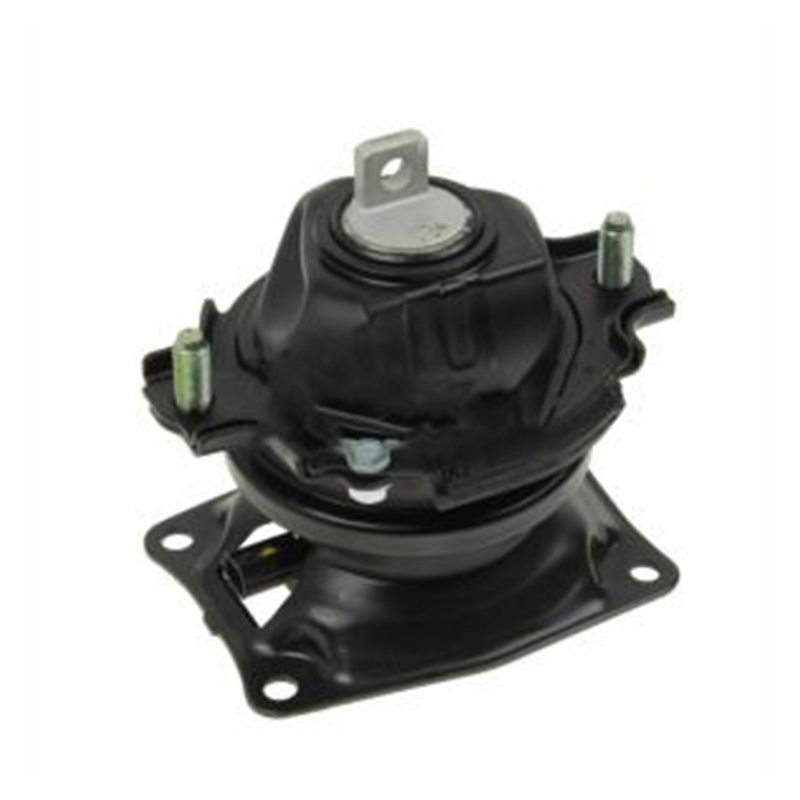
The concept matters when vibration appears or worsens after mount, engine, transmission or supporting-structure work. A new mount can be the correct part yet transmit more vibration if its rubber is held away from its neutral position at rest.

Part of the Engine Mounts, Gaskets and Sealing Guides.
How preload remains after the support is removed
During repair, the engine or transmission may be supported slightly above, below or beside its normal resting position. Brackets can also be drawn into alignment by bolts. If flexible mounts are tightened while the assembly is displaced, their rubber may remain twisted or pulled after the jack or fixture is removed.
The powertrain still appears installed, and every bolt may be tight. The problem is the resting relationship: one mount can be loaded sideways while another is stretched in the opposite direction. Engine vibration then has a stronger path into the body.
Neutralization is a system adjustment, not a mount type
The term does not describe special rubber or a hydraulic feature. It describes control of installed geometry. A NHTSA-hosted service bulletin discusses engine-mount neutralization and mount binding for the vehicles covered by that document. That supports the mechanism and the need for a defined procedure; it does not authorize the bulletin’s steps on another model.
Depending on the vehicle, the relevant procedure may involve particular supports, fasteners, vehicle position and settling steps. Never turn the concept into “loosen all mounts and shake the engine.”
When neutralization deserves attention
| Observation | Why preload becomes relevant | What else remains possible |
|---|---|---|
| New steady vibration immediately after mount work | The installed relationship changed at that repair | Wrong part, hard contact or another mount |
| Rubber visibly pulled to one side at rest | The mount may be held away from its intended position | Incorrect bracket or damaged mount |
| Bracket holes aligned only under force | Fasteners may have drawn the system into preload | Wrong bracket, collision damage or subframe shift |
| Vibration follows subframe or powertrain removal | Several mounting datums may have changed | Exhaust, driveline or engine-running problems |
Do not use neutralization to hide wrong fitment
If a mount’s studs, bracket offsets or installed height do not agree with the application, forcing them into alignment can create exactly the preload being investigated. First confirm VIN/chassis, engine, transmission, drivetrain, production range and mount position. Compare the complete assembly, including brackets and stops.
A neutralization procedure cannot make the wrong mount equivalent. Nor can it repair separated rubber, lost hydraulic fluid or a deformed bracket.
Separate the original complaint from the new one
Suppose the vehicle originally had a knock during acceleration. After one mount is replaced, the knock disappears but a steady idle buzz begins. Those are two observations. The first suggests the repair changed powertrain movement; the second directs attention to installed isolation, fitment and contact.
If both complaints are described simply as “vibration,” the diagnostic value of the before-and-after change is lost. Record engine temperature, transmission state, accessory load and engine-speed range for each condition.
Look for a hard path around the rubber
An exhaust pipe, heat shield, intake duct, hose or bracket can touch the body after powertrain position changes. That contact bypasses the mount’s flexible path. Fresh witness marks or a clearance that closes under load can make hard contact more plausible.
Inspection around a running engine requires the exact safe diagnostic method. Do not place hands or tools near moving, hot or high-load components to watch the powertrain move.
Neutralization and companion mounts
Engine and transmission mounts share load. Replacing or repositioning one can expose a collapsed companion mount or change how a torque strut rests. This does not create a universal rule to replace every mount together. It creates a reason to read the service plan and inspect the complete system.
If the catalog requires additional parts for the specified repair, include them. If it services one mount independently, do not add unrelated components merely to follow a set-replacement habit.
What makes the result reviewable
- exact vehicle, powertrain and mount position;
- old and new part references and package scope;
- the service procedure and revision used;
- the operating condition before and after repair;
- visible mount alignment and any contact marks;
- whether related structural work was performed.
Preserve this evidence before loosening the system again. Once fasteners are released, the preload condition may change and become difficult to reconstruct.
Questions about mount neutralization
Is neutralization required whenever a mount is replaced?
Use the exact service information. The requirement and method vary by vehicle and repair scope.
Can neutralization fix a stiff aftermarket mount?
It can address installation preload when the procedure applies. It cannot change an incorrect application or product construction.
Does a centered-looking engine prove the mounts are neutral?
No. Visual centering without the specified datums and procedure cannot establish load distribution across the mount system.
Can the supplier perform neutralization before shipping?
No. It is an installed-vehicle relationship. The supplier can confirm part identity and geometry; the service procedure controls installation.
Neutralization is best understood as removing unintended installed bias. It is one precise branch of a post-repair vibration diagnosis, not a general cure for every engine vibration and not a substitute for the correct mount.
Related articles
 Exhaust Manifold Gasket Orientation: When the Metallic Face MattersKnowledge
 Exhaust Clamps: Choose for the Pipe Joint, Not Diameter AloneKnowledge
 Brake Light Switch Replacement: Check the Adjuster Design Before Handling ItKnowledge
 Fuel Line Hose: Fuel Resistance Does Not Prove Injection-System SuitabilityKnowledge

