
Can a New Engine Mount Be Stiffer Than the Old One?
Can a New Engine Mount Be Stiffer Than the Old One?
Yes, a new mount can feel firmer than a worn, softened or collapsed one, but “new rubber is stiffer” is not a sufficient explanation for strong vibration after replacement. The real test is whether…
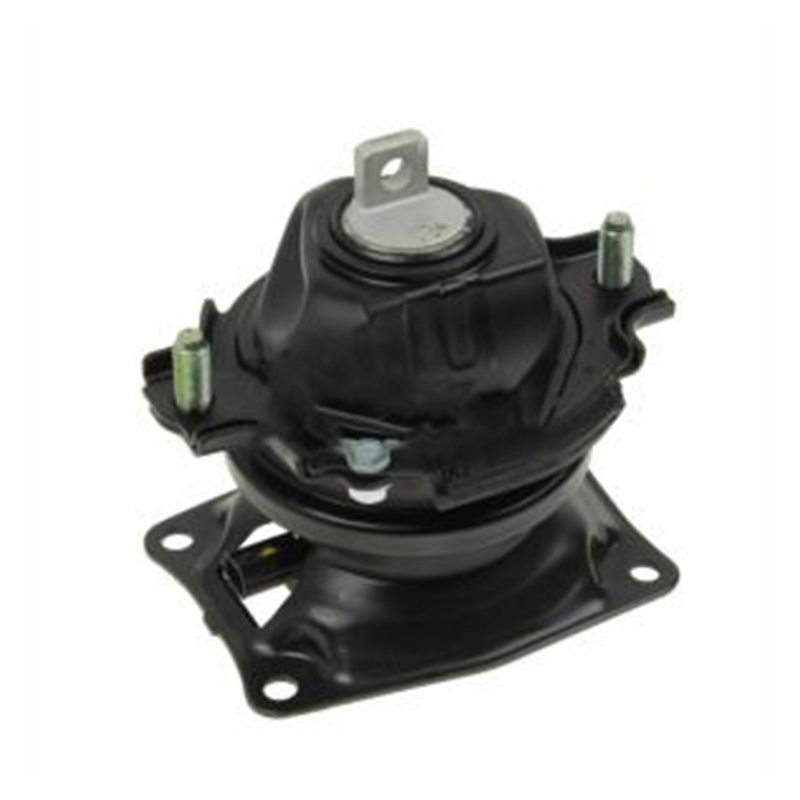
Yes, a new mount can feel firmer than a worn, softened or collapsed one, but “new rubber is stiffer” is not a sufficient explanation for strong vibration after replacement. The real test is whether the correct mount is installed without bind and whether the rest of the powertrain is operating and supported as intended.
A driver often notices the change at idle, in Drive with the brake applied, during engine start or when shifting between Drive and Reverse. A modest change can reflect restored control of powertrain movement. A harsh buzz through the steering wheel, seat or body calls for diagnosis rather than an assumption that it will simply wear in.
Part of the Engine Mounts, Gaskets and Sealing Guides.
Why old and new mounts do not feel the same
An old mount may have cracks, separated bonds, lost fluid or permanent compression. Its static height and its response to different vibration frequencies can change. A replacement returns the powertrain closer to its intended position and resists movement that the old part allowed. That can expose contact elsewhere or make another weak mount more noticeable.
Hand squeezing does not settle the comparison. Installed stiffness depends on rubber geometry, voids, internal stops, hydraulic chambers, load direction, temperature and the weight carried by the mount. Two parts that feel different on a bench can behave correctly under load; two that feel similar can have different dynamic response.
Sort the result into three patterns
| What changed | More likely direction | Next useful check |
|---|---|---|
| Less engine movement, small idle feel change, no contact or noise | Normal difference may be present | Confirm fitment and recheck after a short controlled drive |
| Strong vibration immediately after tightening | Bind, wrong position, wrong part or assembly error | Inspect seating and follow the exact neutralization procedure |
| Clunk reduced but vibration remains under load | Companion mount, exhaust/contact issue or engine running fault | Observe the whole system, not only the replaced mount |
| Vibration only with A/C, steering load or in one gear | Idle-load interaction or resonance | Compare engine speed, operating condition and contact points |
Five causes to rule out before blaming material hardness
The mount is correct in shape but wrong in specification
Some applications split by engine, transmission, drivetrain, emissions package or production date. The housing may bolt up while the isolator tuning or installed height differs. Verify with VIN or engine information and an OE-based application record, not appearance alone.
The powertrain was tightened while displaced
If fasteners are secured while the engine or transmission is pulled away from its natural supported position, the mount can remain twisted or side-loaded. Manufacturers may call the correction neutralization or relaxation. The safe support points, loosening order and torque sequence are vehicle-specific; a generic “loosen every mount” instruction is unsafe and may damage the assembly.
A bracket, shield or exhaust component is touching the body
A few millimetres of restored powertrain height can close a clearance that was previously open—or reveal that another component was bent. Metal-to-metal contact bypasses the rubber isolation path, so a small touch point can transmit more vibration than the mount itself.
Another mount is collapsed
Mounts share load and control rotation in different directions. Replacing one changes how the group carries torque. The new part may be doing its job while an old torque strut or transmission mount reaches a stop. Inspect the system as an arrangement, while avoiding the blanket claim that every mount must always be replaced together.
The engine is producing abnormal vibration
A misfire, unstable idle, incorrect idle speed or accessory load can be masked by a very soft old mount. Replacing the mount does not create that excitation, but it can change how the driver perceives it. Scan data, fault codes and basic engine checks help separate the source from the transmission path.
What a short road test can establish
Record the conditions instead of using “vibrates more” as the whole diagnosis. Compare cold and warm idle; Park or Neutral versus Drive; A/C off versus on; gentle acceleration versus lift-off; and left versus right steering load where appropriate. A repeatable condition is more useful than a general impression.
Then inspect clearances and mount position under safe, controlled conditions. Do not stand near moving belts or place any part of the body below an unsupported powertrain. If a service procedure calls for supporting the engine, use the specified lifting or support points and equipment.
FAQ
Will a new engine mount soften after driving?
Elastomer response can change with temperature and early use, but there is no universal mileage at which a harsh installation becomes correct. Do not use “break-in” to dismiss severe vibration.
Does a harder rubber durometer automatically mean a bad mount?
No. A durometer reading describes one material measurement under defined conditions; mount behavior also depends on geometry, hydraulic features, load and direction. It is not a complete interchange test.
Should all mounts be replaced as a set?
Inspect all of them, then follow the vehicle and supplier guidance. Some jobs benefit from addressing multiple deteriorated mounts, but age alone does not prove every mount is unserviceable.
Can incorrect bolt torque cause vibration?
Incorrect tightening can contribute to poor seating, movement or damage. Torque value alone does not remove bind; the correct support condition and sequence also matter.
Related articles
 Before You Reset a Check Engine Light, Check Diagnostic and Readiness StatusKnowledge
 Exhaust Manifold Gasket Orientation: When the Metallic Face MattersKnowledge
 Exhaust Clamps: Choose for the Pipe Joint, Not Diameter AloneKnowledge
 Brake Light Switch Replacement: Check the Adjuster Design Before Handling ItKnowledge

