
Engine Mount vs Mounting Bracket: What Is Included in the Box?
Engine Mount vs Mounting Bracket: What Is Included in the Box?
An “engine mount” listing may describe only the bonded rubber insulator, an insulator with one metal bracket, or a larger ready-to-install assembly. The name alone does not define the box. Before comparing price or…
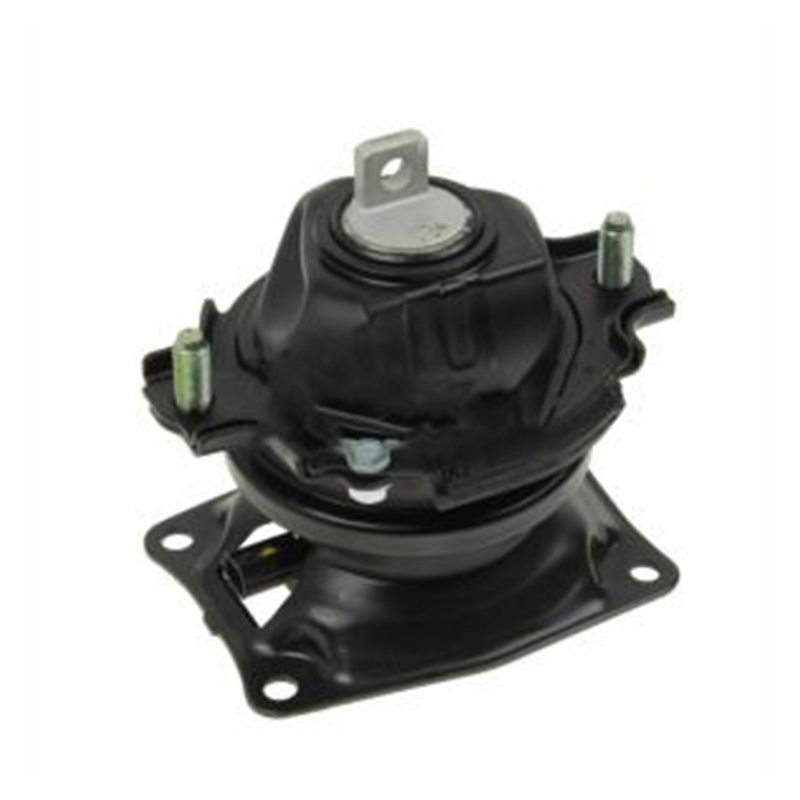
An “engine mount” listing may describe only the bonded rubber insulator, an insulator with one metal bracket, or a larger ready-to-install assembly. The name alone does not define the box. Before comparing price or ordering a replacement, match the catalog callout, the interfaces on the vehicle and an explicit list of included pieces.
This distinction matters because several pieces meet at the same location. One attaches to the engine or transmission, another attaches to the body or subframe, and an elastomer or hydraulic element isolates movement between them. Sellers, workshops and even vehicle catalogs may use “mount,” “insulator,” “bracket” and “mounting assembly” at different levels of that stack.
Part of the Engine Mounts, Gaskets and Sealing Guides.
Start with the load path, not the product name
Imagine tracing a continuous path from the powertrain to the vehicle structure. You may encounter a cast engine-side bracket, a through-bolt, a rubber or hydraulic isolator, a body-side bracket and several fasteners. The isolator controls motion and vibration. The brackets place that isolator at the correct angle and connect it to the surrounding structure.
A catalog can assign separate part numbers to every piece, combine the isolator with one bracket, or service the entire group as one assembly. That packaging decision is application-specific. It is why two products described as a “right engine mount” can look very different without either description being automatically wrong.
| Term on a listing | What it often means | What still needs confirmation |
|---|---|---|
| Insulator | The rubber-bonded or hydraulic element | Whether studs, sleeves or an attached plate are part of it |
| Bracket | A rigid cast or stamped connector | Engine side or body side; bracket only or bracket with isolator |
| Mount | Could mean the isolator or the serviced assembly | Exact catalog callout and included-piece statement |
| Mount kit / assembly | More than one component | Which brackets, bolts, shields or vacuum/electrical parts are actually included |
A reliable four-step box-content check
1. Locate the part number on an exploded drawing
The callout shows the service boundary. If the isolator and bracket have different callout numbers, a listing for one should not be assumed to include the other. If the drawing assigns one number to the combined shape, the assembly may be serviced together. Use the drawing for the exact engine, transmission, drivetrain and production range; similar layouts can use different service boundaries.
2. Compare every attachment interface
Count the studs and holes, then identify what each one connects to. Include threaded sleeves, through-bolt bores, locating tabs and any hose or electrical connection. A replacement that reproduces the isolator but omits a reusable engine-side bracket may still be correct. A replacement that lacks a non-transferable embedded stud is a different matter.
3. Read an explicit “includes” statement
Useful wording names the pieces: “mount with engine-side bracket,” “insulator only,” or “bracket and mount assembly; hardware not included.” Phrases such as “complete,” “direct fit” and “ready to install” are too broad to prove that bolts, heat shields or secondary brackets are present.
4. Check whether omitted pieces can be transferred
A separate bracket may be designed for reuse after inspection. Transferability depends on its condition and the service procedure. Cracks, distorted holes, damaged threads, heavy corrosion at a seating face or a seized fastener change the answer. Torque-to-yield bolts and application-specific locking hardware also require the current service instructions.
Why pictures can produce a false match
A single front-angle image can hide the underside of a mount, an electrical connector or the flange that distinguishes a combined assembly from an insulator. Some catalog images are representative. Others show an early revision while the supplied part follows a later service design. A photo can confirm obvious geometry, but it cannot overrule a vehicle-specific application record or a documented supersession.
For a useful image comparison, request the same views of both parts: engine side, body side, top, bottom and connector or hose area. Put a ruler in the plane being measured, not several centimetres in front of it. Photograph the label separately so the physical sample remains tied to its reference.
Resolve the common ordering disputes
“The new box has fewer pieces than the old assembly.” Determine whether the missing item has its own callout and is meant to transfer. If it does, fewer pieces do not prove the order is incomplete.
“The cheaper listing says mount only.” Compare like with like. An insulator-only price should not be compared with a bracketed assembly until the cost and condition of reusable pieces are understood.
“The bracket holes line up, so the assembly is correct.” Hole alignment proves only one interface. Installed height, load angle, isolator construction and powertrain application can still differ.
FAQ
Are mounting bolts normally included with an engine mount?
There is no universal rule. Hardware is included only when the catalog or package contents say so. Use the service information to determine whether old fasteners may be reused.
Does “with bracket” mean both the engine-side and body-side brackets?
No. It proves only that at least one bracket is part of the listed assembly. The image, callout and component description must identify which one.
Can I move the old bracket to a new rubber mount?
Only when the design and repair procedure allow separation. Do not press apart or reassemble a bonded mount that is serviced as one unit.
What should I send a supplier when the old part is already removed?
Send its readable numbers, five-sided photos, attachment details and the vehicle’s VIN or complete configuration. Also state which adjacent pieces are still on the vehicle; that prevents a loose bracket from being mistaken for a missing part.
Related articles
 Before You Reset a Check Engine Light, Check Diagnostic and Readiness StatusKnowledge
 Exhaust Manifold Gasket Orientation: When the Metallic Face MattersKnowledge
 Exhaust Clamps: Choose for the Pipe Joint, Not Diameter AloneKnowledge
 Brake Light Switch Replacement: Check the Adjuster Design Before Handling ItKnowledge

