
Thermostat Insert vs Complete Housing: How to Compare What Each Quote Includes
Thermostat Insert vs Complete Housing: How to Compare What Each Quote Includes
Two quotes that both say "thermostat" can describe different products. One may be a valve cartridge that sits in your existing housing. The other may be a moulded housing with the valve, seal and…
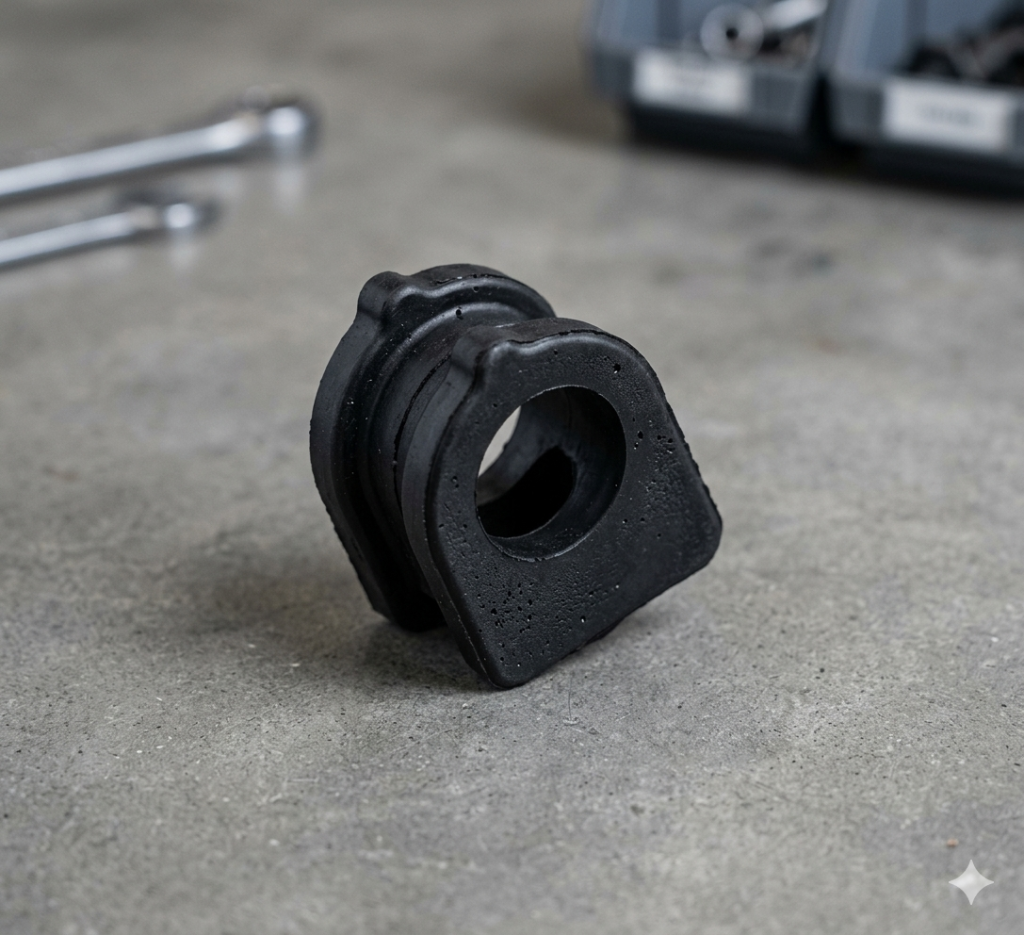
Two quotes that both say “thermostat” can describe different products. One may be a valve cartridge that sits in your existing housing. The other may be a moulded housing with the valve, seal and sensor position built in. The product scope differs, so a price difference between them says little until you record what each package contains.
Gates, a thermostat manufacturer, lists thermostat inserts, regular thermostats and housing thermostats as separate types in its range. It describes housed thermostats as thermostats supplied complete with a housing, and says its thermostats come with matching seals or gaskets. That describes Gates products, not a rule for other brands, so each quote still has to show its own contents.
Part of the Engine Lubrication and Cooling Guides.
Why the Product Name Doesn’t Settle It
The word “housing” is used loosely in listings. In an older design, the aluminium housing and the thermostat were separate parts, each serviceable alone, with a gasket between them. Auto Service World (July 2026) reports that on some newer engines the thermostat housing has become an assembly. That article is trade reporting on a general trend, not a statement about any particular vehicle.
This means a quote can be wrong in two directions:
-
It may offer only a valve for a vehicle whose cooling circuit uses a combined assembly.
-
It may offer a whole assembly, with a higher price and a different fitting job, where only the valve was needed.
Which Fields Settle the Comparison
Tridon’s New Zealand listings show that scope varies even inside one brand. Some entries are marked as inserts only, and others are thermostats supplied with a housing. These are Tridon records for one market. They show which fields to ask for, not what any other seller’s part contains.
Each field answers a different question:
-
Insert or housing. This sets the scope: valve only, valve plus housing, or a larger assembly. Confirm it against the item’s own description, not the title.
-
Seal. Find out whether it is included, which type it is, and whether it can be bought separately.
-
Sensor or heater. A sensor may be fitted, the housing may only provide a position for one, or there may be none. Some applications involve an electrical connection. Check this against the original part.
-
Bolts. Count the fastening points and check whether bolts are supplied. A matching count is evidence of a pattern, not proof of fit.
-
Outlets. Count and orient the coolant ports against the original part.
-
Connector. Record the style and pin count of any electrical plug.
-
Package quantity. One unit per carton, or a kit with several pieces? This matters when comparing per-unit prices.
-
Application. Year, make, model, market and engine code, plus VIN or chassis number where the catalog requires it.
The Verification Record
Fill in one row per quote. The table is a record format, not a set of example values.
A blank field is a Hold. A seller who does not state a value has not shown it is fine. A value copied from another brand’s page does not carry over either.
A Wrong-Match Example
This is a hypothetical case, not a reported event. A buyer needs a replacement for an engine whose original unit is a moulded housing with a built-in sensor position. One quote is for a loose valve insert at a low price. The photo looks similar, because the valve may resemble the part inside the old housing.
Visual similarity shows only that the shapes are alike. The insert quote has no housing, no outlets and no sensor. The buyer would end up with a part that cannot be installed alone, or would have to order the housing separately. Recording “insert vs housing” against the exact listing text catches this before payment. The same record would catch a quote for a larger assembly than the job needs.
When a Visual Match Is Not Enough
A photo or a matching connector does not establish fitment. Compare the exact part and vehicle records, and use the vehicle’s own service information for the procedure.
Do not rely on a reference number as proof. An OE or reference number in a listing is a lead. The interchange must be confirmed in an application catalog or with the seller. A number on the listing does not make the part genuine or vehicle-maker approved.
Also check the vehicle’s VIN against the maker’s or regulator’s recall information, because a campaign repair is a different matter from a customer-paid job.
Torque values, tightening order, coolant specification and filling or bleeding steps are vehicle-specific. This article gives none of them. Get them from the manufacturer’s service information or a qualified technician.
The Next Step
Once every row is Pass, or each Hold has an answer, you can compare the quotes. If a row stays on Hold, ask the seller for the missing value or a drawing before you order.
MR.FAST lists items in its thermostat housing category. You can view the catalog items there, or send your completed record to request exact application evidence. A category listing is not confirmation that a part fits your vehicle, and no specific item is verified by this article.
Related articles
 Exhaust Manifold Gasket Orientation: When the Metallic Face MattersKnowledge
 Exhaust Clamps: Choose for the Pipe Joint, Not Diameter AloneKnowledge
 Brake Light Switch Replacement: Check the Adjuster Design Before Handling ItKnowledge
 Fuel Line Hose: Fuel Resistance Does Not Prove Injection-System SuitabilityKnowledge

