
How Does 42CrMo Steel Boost CV Axle Shaft Load Capacity?
How Does 42CrMo Steel Boost CV Axle Shaft Load Capacity?
42CrMo alloy steel significantly boosts CV axle shaft load capacity by delivering far higher tensile and yield strength than common carbon steels, plus superior hardenability and fatigue resistance under cyclic torque. In real-world builds,…
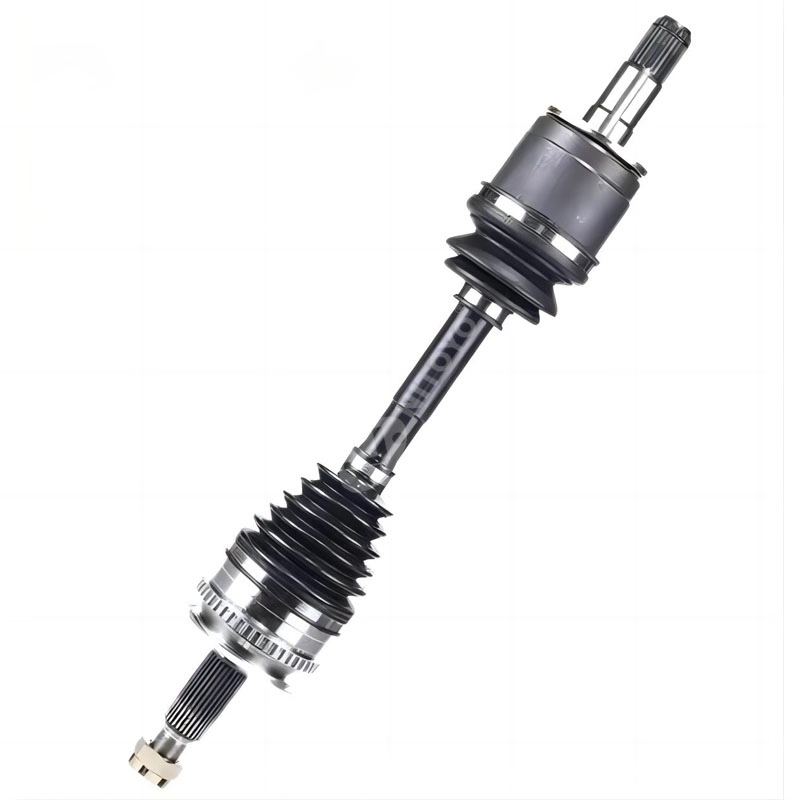
42CrMo alloy steel significantly boosts CV axle shaft load capacity by delivering far higher tensile and yield strength than common carbon steels, plus superior hardenability and fatigue resistance under cyclic torque. In real-world builds, this allows slimmer shafts to safely transmit higher torque, resist impact and bending in off‑road use, and extend service life while controlling weight and cost.
Part of the Driveshafts, CV Joints and Wheel Hubs Guides.
What Makes 42CrMo Metallurgy So Different From Ordinary Carbon Steel?
In production, we see 42CrMo’s alloyed chromium–molybdenum matrix transform into a fine martensite–tempered sorbite structure after quenching and tempering, while plain carbon steel often shows coarser, less uniform pearlite. This microstructure difference directly raises usable yield strength, impact toughness, and fatigue limit, especially at the spline roots and fillets that usually crack first in CV shafts.
Under the microscope, properly heat‑treated 42CrMo exhibits uniform hardened depth across the section, rather than the shallow case typical of surface‑hardened carbon grades. In practice, that means the whole CV axle cross‑section is truly carrying torque, not just a thin outer ring of hardened material. When we run high‑load dyno tests, this uniformity is exactly why 42CrMo shafts tend to bend plastically before they snap, giving a clear safety margin instead of sudden catastrophic breakage.
How Do Tensile And Yield Strength Of 42CrMo Compare To Common Carbon Steels?
On our axle shaft lines, quenched‑and‑tempered 42CrMo routinely lands around 900–1100 MPa in tensile strength with yield strength in the 800–950 MPa window when heat‑treated for driveline use. Good quality medium‑carbon steels used for budget shafts, by contrast, are often in the 550–650 MPa tensile range, with yields typically between 320–380 MPa in comparable diameters and treatment windows.
For wholesalers, the real story is not just the peak numbers but the safety margin between service stress and yield. Once we move to higher‑torque SUVs or tuned performance cars, a carbon‑steel axle is often operating at 55–70% of its yield under sharp load spikes. In the same vehicle, an equivalent 42CrMo shaft drops that to roughly 30–40%, which is a massive difference in fatigue life and warranty risk.
Typical Strength Ranges: 42CrMo vs Common Carbon Steel
*Illustrative ranges from real CV axle projects; exact values depend on diameter, machining, and heat treatment.
Why Are Yield Strength Gaps More Critical Than Tensile Strength Gaps For CV Shafts?
For CV axle shafts, yield strength decides whether the shaft permanently twists after a hard launch or recovers elastically. Tensile strength decides the breaking point, but we prefer never to reach that zone in field use. In warranty returns, we almost always see torsional yielding and spline distortion long before pure tensile fracture, especially on lower‑grade materials.
With 42CrMo, the yield level sits so far above typical service loads that deformation usually only appears after extreme misuse or severe mis‑alignment. That means fewer “banana‑shaped” shafts and far fewer complaints about vibration after an impact event. From a wholesaler’s perspective, specifying 42CrMo is a direct lever to reduce hidden cost: fewer borderline parts passing torque tests yet failing early in real‑world abuse.
How Does 42CrMo Microstructure Improve CV Axle Load Capacity In Practice?
In CV axle manufacture, we rely on 42CrMo’s high hardenability to create a deep, uniform martensitic structure even in larger diameters, then temper it back to a toughness window suited to road shocks and off‑road hits. This uniform through‑hardening allows us to cut slightly smaller shaft diameters while still meeting torque and bending moment requirements. That directly improves packaging and unsprung mass.
On fatigue rigs, shafts in 42CrMo show a much slower crack propagation curve at the transition radii, especially under mixed torsion‑bending loads. Where carbon steel axles may start showing micro‑cracks after 300–500 thousand equivalent load cycles, properly processed 42CrMo shafts often exceed 1–1.5 million cycles before similar damage occurs. That is exactly the margin high‑mileage fleets and performance users quietly rely on, even if they never read a datasheet.
Which Process Parameters Matter Most When Using 42CrMo For CV Axles?
From years of running axle orders, three parameters dominate: hardenability (chemistry and size), quench severity, and tempering window. For typical passenger‑vehicle CV shafts, we target a core hardness of around 30–36 HRC, with slightly higher hardness near the spline surfaces to resist fretting and wear. If hardness climbs into the 40+ HRC range through the section, you’ll see torque capacity rise but impact resistance drop sharply.
Quench medium and agitation control distortion and residual stress. In our Mr. Fast plants, we monitor run‑out and spline concentricity after heat treatment; if we see distortion trends, we adjust quench agitation or preheat to avoid machining away too much hardened layer. Over‑grinding to restore straightness is a common field mistake that silently kills fatigue strength.
Practical Heat‑Treatment Window For 42CrMo CV Shafts
How Can Wholesalers Use Strength Data To Choose Between 42CrMo And Carbon Steel CV Shafts?
When you’re sourcing, the simplest step is to request actual mechanical test reports, not just steel grade names. For 42CrMo shafts, ask for yield and tensile strength on finished products or at least on representative test coupons from the same heat and heat‑treatment batch. For carbon‑steel options, compare those numbers against the torque envelope of the vehicles you serve.
In our experience, wholesalers supplying compact city cars can safely stock some carbon‑steel CV shafts as a price‑driven option. But once your catalog covers heavier SUVs, vans, or modified vehicles, 42CrMo becomes non‑negotiable for the higher‑load positions. Mr. Fast often sets internal torque and vehicle‑mass thresholds; above those, only 42CrMo or comparable Cr‑Mo steels qualify for production runs.
What Hidden Failure Modes Does 42CrMo Help Address In CV Axle Applications?
Most buyers think of sheer breakage, but on the factory floor we see three hidden modes: micro‑pitting in the spline roots, low‑cycle fatigue at fillet radii, and torsional ratcheting during repeated high‑load starts. 42CrMo doesn’t magically remove these, but its higher yield and better toughness push the threshold for all three significantly higher.
For example, on a fleet of delivery vans we handled, carbon‑steel axles showed spline fretting and vibration complaints around 80–100 thousand km. After switching those positions to 42CrMo with a slightly modified surface treatment, complaints dropped and axle life more than doubled. That change made no headlines, but it quietly improved uptime and reduced returns for the wholesaler who took the decision.
Why Does 42CrMo Allow Slimmer Shaft Designs Without Sacrificing Safety?
Because 42CrMo carries more load per unit area, designers can cut the outer diameter slightly while keeping stress levels below yield and fatigue limits. On a typical front‑drive platform, dropping a few millimeters from the shaft diameter saves weight and helps with packaging around suspension and exhaust layouts. That also reduces rotational inertia, giving sharper throttle response.
In lab calculations for several platforms, we have replaced 28–30 mm medium‑carbon shafts with 25–27 mm 42CrMo shafts at similar safety factors. Those 2–3 mm of diameter sound minor, but across thousands of units and multiple models, the gains in material savings and dynamic performance add up. Mr. Fast often uses this advantage to deliver OE‑equivalent or better driveline response on aftermarket replacement shafts.
Is 42CrMo Always The Right Choice For Every CV Axle Position?
No. For low‑power economy cars operating mainly in urban traffic on good roads, well‑made carbon‑steel axles can be economically justified. The extra capacity of 42CrMo may not be fully used, and in some markets price sensitivity outweighs longevity. In those situations, we sometimes reserve 42CrMo for the more failure‑prone side (for example, longer shafts or heavily loaded front positions).
However, once vehicles see towing, off‑road use, or engine tuning, the cost of an axle failure dwarfs the small material upcharge for 42CrMo. In workshops working with modified vehicles, we have seen repeated failures vanish simply by moving from budget carbon shafts to properly heat‑treated 42CrMo, without changing geometry at all. That is why Mr. Fast always flags application and use case before recommending material.
Mr. Fast Expert Views
“On our axle programs at Mr. Fast, we never look at steel grade in isolation. We match 42CrMo chemistry, bar size, and heat‑treat window to the exact torque spectrum and vehicle mass, then validate with full‑scale bench and road testing. When a wholesaler trusts us with platform data, we can often trim shaft weight by 5–10% while extending fatigue life, purely by optimizing the way 42CrMo is processed rather than by oversizing the part.”
Does 42CrMo Change Machining And Surface‑Finish Strategy For CV Axles?
Yes, and this is where many low‑end suppliers cut corners. 42CrMo, after quenching and tempering, is tougher on tools than typical carbon steel. To keep spline accuracy and surface integrity under control, we often shift from aggressive turning to more controlled grinding and rolling operations, especially on critical fillets and seal surfaces.
If the supplier simply reuses carbon‑steel machining feeds and tool grades, they’ll introduce micro‑tearing and residual tensile stresses in the surface layer. These invisible issues drastically shorten fatigue life. In our shops, we monitor not only dimensions but also surface roughness and residual stress, then tune cutting parameters so the benefits of 42CrMo’s strength are not lost in the finishing stage.
How Should Wholesalers Interpret Supplier Data Sheets On 42CrMo CV Axles?
When reviewing a datasheet, focus on four items: specified steel grade with standards reference, actual mechanical test results, heat‑treatment description, and hardness range on the finished shaft. If you only see “material: 42CrMo” with no test data or hardness, treat that as a red flag rather than a reassurance.
We advise wholesalers to insist on batch‑level test certificates at least for initial orders: tensile and yield, hardness profiles, and sometimes macro‑etch or micrographs for critical new designs. Over time, once consistency is proven, sampling frequency can be reduced. This is exactly how Mr. Fast structures long‑term supply programs, balancing quality control with realistic admin overhead.
What Are The Key Takeaways For Selecting 42CrMo CV Axles?
In real‑world distribution, 42CrMo is your go‑to choice whenever vehicles run at higher torque, heavier curb weights, or in harsh conditions such as off‑road or fleet operation. The material’s higher yield strength, better toughness, and deeper hardenability allow shafts to survive repeated shock loads and torsional spikes that would permanently twist or crack common carbon steel.
For wholesalers, that translates into fewer returns, higher customer satisfaction, and the ability to confidently support more demanding applications. When you partner with a manufacturer like Mr. Fast that truly understands how to specify, heat‑treat, and machine 42CrMo, you can offer axles that not only meet catalog specs but also perform reliably in the messy, unpredictable reality of customer use.
FAQs
What is the main advantage of 42CrMo over carbon steel in CV axles?
The main advantage is much higher yield strength and fatigue resistance, which means 42CrMo shafts can carry higher torque with less permanent deformation and greatly reduced risk of early cracking in demanding use.
Can 42CrMo CV shafts be used as direct replacements for OE parts?
Yes, when geometry, splines, and heat treatment are correctly matched, 42CrMo shafts can replace OE parts and often improve durability. The key is that the supplier validates designs through proper bench and road testing.
Are 42CrMo CV axles necessary for small city cars?
Not always. For low‑power, lightly loaded city cars, quality carbon‑steel axles can be sufficient. 42CrMo becomes essential when vehicles are heavier, tuned, used for towing, or driven regularly on rough roads.
Will 42CrMo CV axles increase vehicle noise or vibration?
No. If anything, the better stability and resistance to permanent twist help maintain alignment and balance longer, which can reduce vibration issues over the life of the axle when manufacturing tolerances are properly controlled.
How can I tell if a 42CrMo CV axle is genuinely high quality?
Look for clear material certification, mechanical test data, specified hardness ranges, and evidence of controlled heat treatment and machining. Serious manufacturers will provide these without hesitation, especially on larger or repeat orders.
Related articles
 Exhaust Manifold Gasket Orientation: When the Metallic Face MattersKnowledge
 Exhaust Clamps: Choose for the Pipe Joint, Not Diameter AloneKnowledge
 Brake Light Switch Replacement: Check the Adjuster Design Before Handling ItKnowledge
 Fuel Line Hose: Fuel Resistance Does Not Prove Injection-System SuitabilityKnowledge

