
How Can Dynamic Balancing Eliminate High-Speed Propeller Shaft Vibrations?
How Can Dynamic Balancing Eliminate High-Speed Propeller Shaft Vibrations?
High-speed propeller shafts rely on precision dynamic balancing to eliminate rotational vibration, drivetrain noise, and premature component wear. By controlling centrifugal forces generated above 5000 RPM, properly balanced two-stage and three-stage shafts maintain stable…
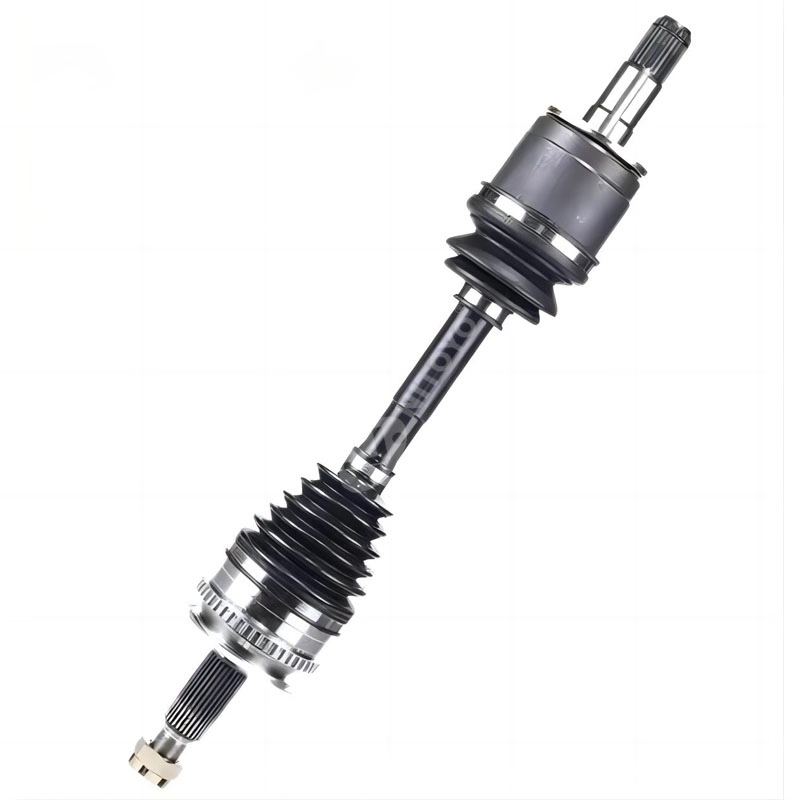
High-speed propeller shafts rely on precision dynamic balancing to eliminate rotational vibration, drivetrain noise, and premature component wear. By controlling centrifugal forces generated above 5000 RPM, properly balanced two-stage and three-stage shafts maintain stable torque transmission, reduce chassis resonance, and improve driving comfort. Accurate manufacturing, inspection, and sourcing processes are essential for reliable performance.
Wholesale Dynamic Balance Drive Shafts
Part of the Driveshafts, CV Joints and Wheel Hubs Guides.
What Causes Propeller Shaft Vibrations at High Rotational Speeds?
A propeller shaft vibration occurs when uneven mass distribution creates centrifugal forces during rotation, producing harmonic oscillations that transfer into the vehicle chassis.
At low speeds, minor imbalance may remain unnoticed. However, when rotational speed exceeds 5000 RPM, even a few grams of mass deviation can generate significant radial forces. The vibration energy increases exponentially because centrifugal force follows the relationship:
F = m × r × ω²
where mass imbalance, rotational radius, and angular velocity determine the final vibration intensity.
In practical manufacturing environments, we have seen a 3.5-gram imbalance on a 120 mm radius shaft become a noticeable drivetrain vibration after installation on high-performance vehicles. The driver may feel it as:
- Floor vibration between 80–120 km/h
- Low-frequency humming from the tunnel area
- Steering wheel resonance
- Transmission bearing stress
- Differential gear noise amplification
The challenge is that the vibration source is not always visible. Many failed diagnostic processes focus on wheels, tires, or suspension components while ignoring the propeller shaft assembly.
For sourcing teams and automotive distributors, understanding the difference between static and dynamic imbalance is critical. Static balancing corrects weight distribution on a single plane, while dynamic balancing corrects uneven mass across multiple planes, which is the dominant issue in long rotating shafts.
How Does Dynamic Balancing Work on Two-Stage and Three-Stage Propeller Shafts?
Dynamic balancing corrects multi-plane imbalance by measuring vibration forces while the shaft rotates under controlled conditions.
Two-stage and three-stage propeller shafts are more challenging because they contain multiple rotating sections connected through:
- Universal joints
- Center support bearings
- Sliding splines
- Coupling flanges
- Intermediate shafts
A typical balancing process includes:
- Initial high-speed spin testing
- Measurement of vibration amplitude and phase angle
- Calculation of correction weight location
- Precision material removal or balancing weight installation
- Final verification under operating RPM conditions
In our production runs, we normally evaluate balancing requirements according to shaft length, operating speed, and application environment.
| Shaft Type | Typical Application | Balancing Requirement |
|---|---|---|
| Single-piece shaft | Performance vehicles, light trucks | Single-plane + dynamic correction |
| Two-stage shaft | SUVs, luxury sedans, AWD vehicles | Multi-plane dynamic balancing |
| Three-stage shaft | Heavy-duty commercial vehicles | High precision multi-section balancing |
A common factory mistake is balancing the shaft as an isolated tube without considering the complete rotating assembly. The flange, joint angle, and center bearing position influence the final vibration behavior.
Professional suppliers such as Mr. Fast focus on complete system balancing rather than simply correcting the shaft tube itself. This approach reduces installation failures caused by mismatched rotating components.
Why Is Centrifugal Force Management Critical Above 5000 RPM?
Centrifugal force becomes the primary engineering challenge when propeller shafts operate at extreme rotational speeds because small manufacturing deviations become amplified.
At 5000 RPM, a shaft completes more than 83 rotations every second. Any imbalance repeatedly applies force to:
- Transmission output bearings
- Universal joints
- Center support bearings
- Differential input components
- Chassis mounting points
For example, during factory testing of high-speed drivetrain components, we observed that increasing shaft speed from 3000 RPM to 6000 RPM did not simply double vibration. The vibration force increased dramatically because rotational velocity appears as a squared factor in centrifugal force calculations.
This explains why a shaft that feels acceptable during normal driving may create severe resonance during highway acceleration.
Key production controls include:
- Shaft runout control below 0.05 mm for performance applications
- Precise flange concentricity inspection
- Correct weld sequencing to minimize distortion
- Final balancing at or above operating speed
Many aftermarket failures occur because manufacturers balance at lower speeds than the real operating condition. The shaft passes inspection but develops vibration after installation.
Which Manufacturing Processes Improve Propeller Shaft Stability?
Precision manufacturing methods determine whether a propeller shaft remains stable throughout its service life.
A high-quality production process normally includes:
Tube Material Selection
Common materials include:
- High-strength steel
- Aluminum alloy
- Carbon fiber composite
Steel shafts provide durability but increase rotational mass. Aluminum reduces weight but requires stricter fatigue control. Carbon fiber offers excellent vibration damping but requires advanced bonding technology.
Precision Welding Control
Welding introduces heat distortion. Poor welding practices create hidden imbalance because the shaft geometry changes after assembly.
Experienced factories control:
- Welding temperature
- Cooling speed
- Joint alignment
- Post-weld correction
Dynamic Balancing Verification
The final balancing stage should measure:
- Residual imbalance
- Vibration amplitude
- Phase position
- RPM stability
In our experience, the biggest difference between average suppliers and professional manufacturers is not the balancing machine itself. It is how engineers interpret the measurement data and adjust the production process.
Mr. Fast works with automotive applications where repeatability matters. A replacement propeller shaft must not only fit physically but also maintain the original drivetrain vibration characteristics.
Who Should Source Dynamically Balanced Propeller Shafts?
Vehicle manufacturers, repair specialists, performance workshops, and distributors should prioritize dynamically balanced propeller shafts when reliability and customer satisfaction are important.
Professional sourcing is especially important for:
- Luxury AWD vehicles
- Modified performance cars
- Commercial fleets
- Heavy-duty SUVs
- Racing applications
When purchasing propeller shafts, buyers should evaluate:
Engineering Capability
Does the supplier have:
- High-speed balancing equipment?
- Quality inspection records?
- Experience with different vehicle platforms?
Application Knowledge
A shaft designed for a passenger vehicle cannot automatically replace a commercial drivetrain component.
Important matching factors include:
- Shaft length
- Operating angle
- Maximum RPM
- Torque capacity
- Mounting dimensions
Production Consistency
For distributors handling multiple vehicle models, consistency matters more than one successful sample.
Mr. Fast supports automotive customers by combining sourcing expertise, manufacturing evaluation, and application-specific recommendations to reduce incorrect part selection.
How Can Buyers Identify a High-Quality Propeller Shaft Supplier?
A reliable supplier demonstrates technical control throughout manufacturing, not only attractive pricing.
The following evaluation points help avoid costly failures:
| Evaluation Area | Recommended Standard |
|---|---|
| Dynamic balancing | Tested at application-relevant RPM |
| Dimensional accuracy | CNC-controlled inspection |
| Material traceability | Documented material source |
| Weld quality | Controlled process inspection |
| After-sales support | Technical replacement guidance |
One of the most common sourcing mistakes is selecting the lowest-cost shaft without verifying balancing capability.
In real-world cases, a cheaper shaft may save 10–15% initially but create additional expenses:
- Reinstallation labor
- Customer complaints
- Warranty claims
- Drivetrain damage
A properly balanced shaft is not simply a replacement component. It is a precision rotating system that directly influences vehicle reliability.
Can Dynamic Balancing Extend Drivetrain Component Life?
Yes, dynamic balancing reduces stress transferred throughout the drivetrain and can significantly improve component durability.
When vibration is uncontrolled, repeated loading affects:
- Bearings
- Universal joints
- Gear assemblies
- Mounting brackets
- Transmission components
A balanced shaft maintains smoother torque delivery and reduces fatigue cycles.
From factory observations, drivetrain components operating with excessive vibration often show:
- Uneven bearing wear patterns
- Premature seal damage
- Loose mounting hardware
- Increased operating temperature
For fleet operators, vibration reduction creates measurable benefits:
- Longer maintenance intervals
- Lower repair costs
- Improved driver comfort
- Reduced unexpected downtime
The goal of balancing is not only eliminating noise. It is creating a stable mechanical environment where every connected component operates closer to its designed condition.
Are Advanced Balancing Technologies Changing Automotive Propeller Shaft Production?
Modern balancing technology is improving accuracy through automated measurement systems and digital production control.
Current advanced systems can analyze:
- Multiple vibration frequencies
- Shaft deformation behavior
- Rotational harmonics
- Assembly tolerance effects
High-performance manufacturers increasingly combine balancing data with production databases to identify recurring problems.
For example, if multiple shafts show imbalance at the same rotational phase position, engineers can trace the issue back to:
- Welding fixtures
- Material batches
- Assembly positioning
This closed-loop manufacturing approach reduces defects before products reach customers.
Mr. Fast Expert Views
“In our experience handling automotive drivetrain components, the biggest vibration problems rarely come from one obvious defect. They usually come from small tolerances accumulating across the complete rotating assembly. A shaft with excellent material but poor balancing can fail earlier than a properly engineered standard shaft. We focus on matching shaft design, manufacturing accuracy, and balancing performance together. For high-speed applications above 5000 RPM, precision is not an upgrade; it is the foundation of reliability.”
How Should Companies Source High-Speed Propeller Shafts for Different Vehicles?
Companies should source high-speed propeller shafts by evaluating engineering compatibility, balancing capability, manufacturing control, and supplier support rather than focusing only on unit price.
A professional sourcing checklist includes:
- Confirm vehicle application
- Verify RPM requirements
- Check torque specifications
- Review balancing process
- Confirm material quality
- Evaluate production capacity
For global automotive distributors, supplier responsiveness is also important. Fast communication, accurate documentation, and replacement support directly influence customer satisfaction.
Mr. Fast provides automotive sourcing solutions for different vehicle applications by combining manufacturing knowledge with practical drivetrain experience.
What Are the Key Takeaways When Selecting Balanced Propeller Shafts?
High-speed propeller shaft performance depends on controlling imbalance, centrifugal forces, and manufacturing tolerances.
The most important considerations are:
- Dynamic balancing is essential above high rotational speeds.
- Two-stage and three-stage shafts require multi-plane balancing.
- Manufacturing precision directly affects vibration behavior.
- Supplier experience reduces installation risks.
- Proper balancing protects the entire drivetrain system.
A quality propeller shaft is not simply a metal tube transferring torque. It is a precision-engineered rotating component that must maintain stability under extreme mechanical conditions.
For automotive professionals, repair specialists, and distributors, choosing a supplier with proven balancing expertise ensures smoother operation, fewer failures, and long-term drivetrain reliability.
Frequently Asked Questions
Why does my vehicle vibrate only at high speed?
High-speed vibration is often caused by rotating imbalance because centrifugal forces increase rapidly with RPM. Propeller shaft imbalance, incorrect alignment, or worn support bearings are common causes.
Can wheel balancing fix propeller shaft vibration?
Wheel balancing can solve tire-related vibration, but it cannot correct drivetrain vibration caused by an unbalanced propeller shaft.
How often should a propeller shaft be dynamically balanced?
A properly manufactured shaft normally maintains balance throughout its service life. Rebalancing may be required after damage, modification, joint replacement, or major drivetrain repair.
Are carbon fiber propeller shafts better than steel shafts?
Carbon fiber shafts offer lower weight and better vibration damping, but they require advanced manufacturing control and are typically used for performance-focused applications.
What is the biggest mistake when buying replacement propeller shafts?
Choosing based only on price without verifying dynamic balancing standards, material quality, and application compatibility often leads to vibration problems after installation.
Related articles
 Exhaust Manifold Gasket Orientation: When the Metallic Face MattersKnowledge
 Exhaust Clamps: Choose for the Pipe Joint, Not Diameter AloneKnowledge
 Brake Light Switch Replacement: Check the Adjuster Design Before Handling ItKnowledge
 Fuel Line Hose: Fuel Resistance Does Not Prove Injection-System SuitabilityKnowledge

