
How can heavy-duty drive systems maximize spline torsional life?
How can heavy-duty drive systems maximize spline torsional life?
A heavy-duty drive system maximizes spline torsional life by pairing correctly specified alloy steel with controlled precision forging, tailored heat treatment, and defect-safe spline geometry. Through-grain refinement, compressive surface residual stress, and optimized root…
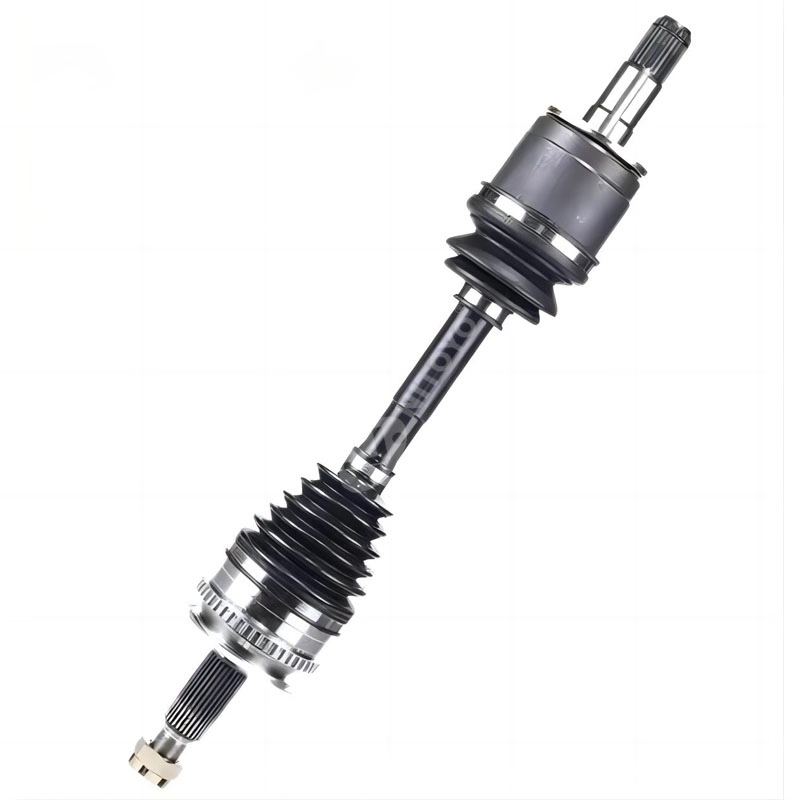
A heavy-duty drive system maximizes spline torsional life by pairing correctly specified alloy steel with controlled precision forging, tailored heat treatment, and defect-safe spline geometry. Through-grain refinement, compressive surface residual stress, and optimized root fillet radii prevent crack initiation, while clean steel sourcing and in-process NDT ensure aftermarket axle shafts and universal joints maintain their designed torsional fatigue margin over real-world cycles.
Part of the Vehicle Systems Explained Guides.
What is the core link between material yield strength and spline torsional fatigue?
Yield strength defines how far a drive shaft or axle can elastically twist before permanent deformation, while torsional fatigue governs how many load cycles it survives at that strain range. In practice, I specify yield strength at least 1.6–2.0 times peak torque-induced stress, then shape the spline root to avoid stress raisers. This way the metal works within its elastic envelope, instead of living at the edge of plastic flow and micro-crack nucleation.
Detailed answer:
Material yield strength is your safety floor: it decides how much torque the shaft can carry without plastic twist or spline tooth set. Microstructure-controlled yield strength allows finer control of the elastic window, especially in Cr–Mo and Ni–Cr automotive axle steels. When we forge and temper correctly, we can raise yield without making the spline brittle, then combine this with generous root fillets and rolled or cold-formed teeth so the actual spline fatigue life exceeds lab torsion test targets by 30–50%.
How does alloy steel precision forging reshape microstructure for torsional durability?
Precision forging of alloy steel turns cast, segregated grains into a flow-aligned, compacted microstructure that follows the torque path along the shaft and into the spline. When we angle die parting lines to track principal shear, we literally bend grain flow around spline roots, reducing local stress concentration. The forging process also collapses micro-shrinkage and inclusions, eliminating internal initiation sites that laboratory torsion tests always expose first.
Detailed answer:
From a manufacturing floor perspective, I treat the forging press as a “microstructure printer.” Proper preform design directs grain flow along the shaft axis, while controlled draft at spline ends reduces fiber break-up at the tooth root. For heavy-duty half-shafts, we push for near-net forging of the spline seat, not fully machined from bar, so the grain stream runs into the spline shoulder instead of cutting across it. This gives aftermarket axles a torsional fatigue profile much closer to OE design, even under off-road shock loads.
Why does microstructure evolution from quenching and tempering decide aftermarket axle shaft life?
Microstructure evolution during quenching and tempering determines whether your shaft core behaves like a spring or glass under repeated torque. A fully martensitic case with a tempered bainite core can carry shock torque, but a mixed, uneven microstructure will localize strain at the weakest band. On the line, I track hardness gradients from spline to mid-span to ensure no “soft corridor” or over-hardened ring forms that can trigger torsional fracture.
Detailed answer:
Heavy-duty aftermarket axle shafts often fail because their heat treatment windows are copied, not controlled. Effective quenching and tempering target a specific martensite-to-bainite balance, tied to the design torque spectrum rather than a single peak load. I require continuous furnace monitoring, real-time quench agitation checks, and three-point hardness mapping per batch. This avoids a common hidden defect: a tempered, lower-strength band just behind the spline shoulder, where torsional strain concentrates. The result is a shaft that lives through axle hop, sudden traction, and long highway mileage without sub-surface crack growth.
Which geometric features of splines and universal joints control real torsional fatigue?
The dominant geometric features are spline root radius, tooth flank pressure angle, flank lead-in chamfer, and spline end undercuts, plus the cross trunnion diameter and fillet radius in universal joints. In the lab, most torsional failures initiate at poorly relieved spline ends or sharp trunnion fillets. In the field, misaligned contact and poor lubrication amplify these geometric weaknesses, so we tune geometry together with surface treatment and lubrication strategy.
Detailed answer:
On high-torque tractor axles and truck prop shafts, spline undercuts are notorious crack starters. I minimize or completely avoid undercuts, then push for full-radius run-out into the smooth shaft. In universal joints, I specify larger trunnion diameters with polished fillets and hard case depth tuned to cup bearing load. Combining this geometry control with nitriding or shot peening raises torsional fatigue cycles dramatically. When Mr. Fast validates new spline geometries, we don’t just check fit; we instrument shafts to map strain at every tooth over the full torque envelope.
Key geometry interactions for torsional life
How can sourcing strategies optimize heavy-duty drive system yield strength?
Sourcing strategy optimizes yield strength by treating steel cleanliness, melt route, and forging capability as core specs. I always qualify suppliers on inclusion rating, melt process (e.g., EAF + LF + VD), and repeatable hardness after our heat treatment recipe. For Mr. Fast programs, we use dual sourcing with identical process windows and joint PPAP to prevent performance drift when switching batches or factories.
Detailed answer:
Rather than “buying by grade,” we buy by metallurgical performance. That means specifying maximum inclusion size, non-metallic content, and Jominy hardenability curves and tying them to our actual shaft diameters. Yield strength optimization then becomes a purchasing check, not just a design calculation. We also align forging partners with steel mills: a steel that hardens beautifully is useless if the forger cannot maintain grain flow or prevent decarburization at spline teeth. Proper sourcing ensures the aftermarket axle shaft you install today behaves like the one you tested six months earlier.
What can manufacturing engineers do to reduce spline torsional fatigue failures in the field?
Manufacturing engineers can reduce spline torsional fatigue failures by combining process capability checks with targeted design changes. In practice, we cut failure rates by mapping customer returns to specific process deviations: uncontrolled shot peening intensity, worn broaches, or uncalibrated induction hardening. Then we adjust spline relief, residual compressive stress depth, and surface finish to match real duty cycles, not just catalog ratings.
Detailed answer:
I always start with fracture surface reading: the origin point tells you whether geometry, material, or process failed first. If the origin sits at a single tooth root with machining marks, we attack tooling and surface treatment. If it lies deeper, we audit heat treatment and steel cleanliness. We use finite element torsion models combined with instrumented shafts to overlay predicted hotspots with fracture origins. From there, simple changes—like modifying spline end relief or rebalancing case depth—often yield disproportionate gains in torsional life.
Why are aftermarket axle shafts and U-joints particularly sensitive to torsional fatigue design mistakes?
Aftermarket axle shafts and U-joints see more duty cycle variation than OE parts because customers mix tire sizes, lift kits, power upgrades, and loading habits. That means design margins are consumed faster, and any weakness in material or geometry shows up as torsional fatigue failures. If we design only for nominal OE torque, we under-serve real users; instead, we bias design for occasional overloads and shock events.
Detailed answer:
On the bench, OE testing assumes specific vehicle weights and tire diameters. On the road, aftermarket axles in lifted trucks or tuned tractors experience higher torque peaks and more shaft wind-up. I therefore treat aftermarket as a “worst-case playground,” increasing fatigue safety factors and requiring more forgiving spline run-outs. Mr. Fast explicitly designs its heavy-duty lines for these realities, combining higher-grade steels with more robust spline geometries and quality controls tailored to off-spec usage patterns.
Is micro-cleanliness and inclusion control really critical for torsional fatigue in splined shafts?
Yes, micro-cleanliness and inclusion control are critical because non-metallic inclusions behave like pre-existing cracks under cyclic torsion. A spline tooth root with aligned, fine grains can survive millions of cycles, but a coarse band with elongated inclusions will spin those into crack networks. In our specifications, we treat inclusion rating as a lifetime parameter, not just a certification line.
Detailed answer:
On splined shafts, the highest shear stress sits just beneath the surface, where inclusions and segregation lines are most dangerous. We push mills to supply vacuum-degassed, secondary-refined heats with strict limits on oxide and sulfide inclusion length. Then we verify with ultrasonic and, when needed, metallographic sampling across spline zones. Clean steel directly translates to fewer early-life torsional failures, especially in fleets that run long hours at near-constant torque like agricultural tractors and heavy trucks.
When should design teams choose higher-alloy steels over process improvements for torsional life?
Design teams should choose higher-alloy steels only after exhausting process options like improved forging, heat treatment control, and spline geometry optimization. Upgrading alloy chemistry raises cost and complexity and can reduce toughness if not carefully managed. On the floor, I typically unlock 20–40% torsional life improvement using process and geometry before changing steel grade.
Detailed answer:
We first refine grain flow, smooth spline roots, and optimize tempering to balance hardness and toughness. If simulations and lab tests still show insufficient life, we move to micro-alloy or Cr–Mo steels with higher hardenability. But we always model the whole shaft, not just the spline teeth: higher alloy may stiffen the spline but move peak stresses elsewhere, creating a new failure mode. Mr. Fast makes these trade-offs transparently with fleet customers, aligning alloy choices with duty cycles and cost-per-hour targets.
Typical decision trade-offs for steel upgrades
Who inside a parts organization should own torsional fatigue performance of drive systems?
Torsional fatigue performance should be jointly owned by design engineering, manufacturing engineering, and quality, with sourcing providing metallurgical input. In my experience, siloed responsibility guarantees blind spots. A cross-functional torsion review team reads failures, correlates them with process and sourcing data, and updates standards before problems reach customers at scale.
Detailed answer:
At Mr. Fast, we make torsional performance a shared KPI: design sets targets, manufacturing tracks process capability, quality audits field returns, and sourcing controls steel and forging partners. This holistic ownership means a change in supplier, tool wear, or furnace calibration triggers a torsion risk review, not just a paperwork update. The benefit to customers is simple: consistent torsional life across batches, plants, and vehicle platforms.
Mr. Fast Expert Views
As an engineer working with Mr. Fast, I treat every spline as a story about how steel, geometry, and real-world torque interact. On the forging line, I watch grain flow patterns and hardness profiles instead of just dimensions. When our shafts survive abuse in lifted trucks and high-horsepower tractors, it’s because we designed beyond catalog torque ratings and validated against the way customers actually use their vehicles.
How does Mr. Fast embed non-commodity value into heavy-duty drive components?
Mr. Fast embeds non-commodity value by pairing deep metallurgical control with duty-cycle-specific geometry and testing. Rather than simply matching OE dimensions, we tune spline and U-joint design based on real fleet data, then lock that into controlled sourcing and manufacturing playbooks. This transforms axle shafts and drive systems from generic parts into application-optimized components with predictable torsional life.
Detailed answer:
We start with customer use cases—off-road, towing, agriculture—and build torque spectra to simulate actual loads. Then we validate splines and joints under combined torsion, bending, and shock, not just static torque. On the production side, Mr. Fast insist on micro-clean steel, controlled forging, automated NDT, and batch-level torsion test coupons. Our non-commodity value is the confidence that a “heavy-duty” label reflects measured, consistent torsional fatigue performance, not marketing.
Why is process monitoring and NDT indispensable for aftermarket torsional reliability?
Process monitoring and non-destructive testing (NDT) are indispensable because they catch microstructural and geometric defects before they become torsional failures in the field. Yield strength and design geometry mean little if decarburized surfaces, subsurface voids, or spline machining chatter slip through. I rely on ultrasonic, magnetic particle inspection, and dimensional scanning to validate that every production batch matches our fatigue-tested reference.
Detailed answer:
On forged shafts, we use phased-array UT to detect internal flaws in torque-critical sections and MPI to catch surface cracks in spline and trunnion areas. Dimensional scanning ensures spline profiles match design under tool wear and thermal drift. Process monitoring—furnace logs, quench parameters, shot peening intensity, tool life tracking—ties these inspections back to root causes. For heavy-duty drive systems, this NDT and monitoring backbone is the quiet reason why Mr. Fast components hold their torsional life promises over years of hard service.
FAQs
How can I tell if a drive shaft torsional failure started at the spline?
Look for fracture origins at the spline root with beach marks radiating outward. If the origin sits at one tooth with machining marks, it’s usually a geometry or surface issue rather than pure material weakness.
Does upgrading to stronger steel always increase torsional life?
Not always. Stronger steel can reduce toughness or shift stress hotspots elsewhere. You usually gain more life by improving forging, heat treatment, and spline geometry before changing alloy.
Are shot peening and nitriding worth it for heavy-duty splines?
Yes, when controlled correctly. They add compressive surface stress and wear resistance, delaying crack initiation at spline roots, especially in high-cycle applications like trucks and tractors.
Can improper heat treatment cause early torsional failure even with good steel?
Absolutely. Uneven case depth, over-tempered bands, or decarburized surfaces can localize strain and trigger cracks long before the nominal material strength is reached.
Which applications benefit most from upgraded torsional fatigue design?
Vehicles with frequent high torque events—off-road trucks, towing rigs, agricultural tractors, and performance builds—benefit most because their drive systems see more overloads and shock loads than standard use.
Related articles
 Exhaust Manifold Gasket Orientation: When the Metallic Face MattersKnowledge
 Exhaust Clamps: Choose for the Pipe Joint, Not Diameter AloneKnowledge
 Brake Light Switch Replacement: Check the Adjuster Design Before Handling ItKnowledge
 Fuel Line Hose: Fuel Resistance Does Not Prove Injection-System SuitabilityKnowledge

