
Drivetrain Spline Tolerances: Better Fit, Less Wear
Drivetrain Spline Tolerances: Better Fit, Less Wear
Drivetrain spline tolerances shape fit, backlash, noise, and durability. Learn how to specify and inspect them with a practical sourcing lens. Part of the Vehicle Systems Explained Guides. Market context for drivetrain spline tolerances…
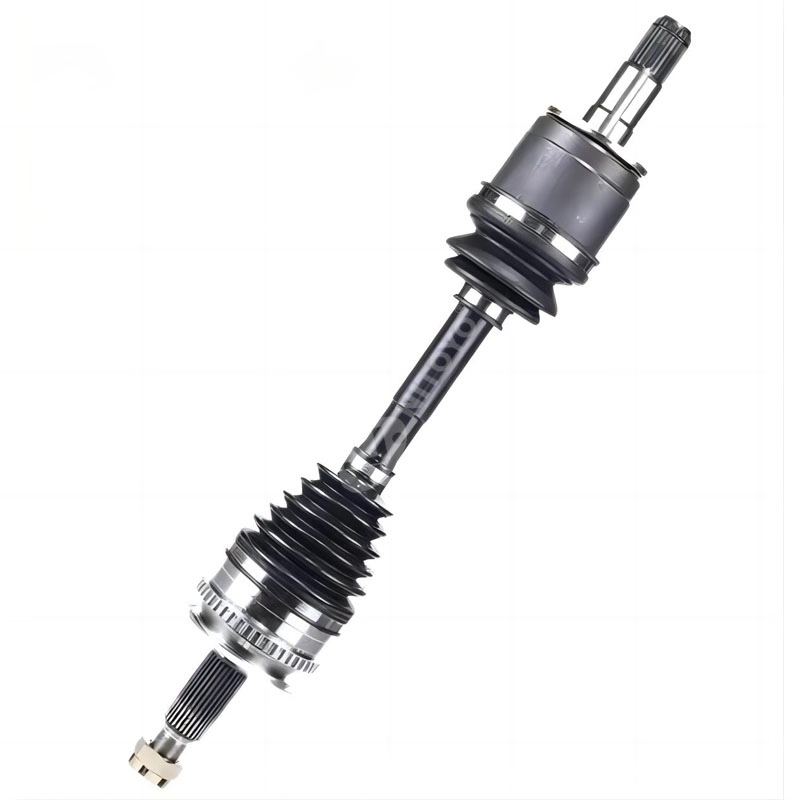
Drivetrain spline tolerances shape fit, backlash, noise, and durability. Learn how to specify and inspect them with a practical sourcing lens.
Part of the Vehicle Systems Explained Guides.
Market context for drivetrain spline tolerances
Drivetrain spline tolerances sit at the intersection of torque transfer, noise control, and long-term durability. Standards and engineering references show that spline systems are governed by fit and backlash, not just nominal size, and that small geometric deviations can affect contact behavior and service life. Recent research also shows that spline-related rattle remains a live engineering issue in drivetrain behavior, which keeps tolerance control relevant for both OEM and aftermarket applications. For buyers and engineers, the message is simple: tolerance is part of performance, not a clerical detail.
Brand introduction
MR.FAST Auto Parts is a broad aftermarket supplier with a dedicated Products page that organizes catalog families such as Transmission Series and Drive System. The site also shows drive-related categories including free wheel hub, wheel hub, C.V. joint, and U joint, which makes the brand relevant to drivetrain sourcing conversations. Public brand pages also reference over 40,000 SKUs and a 1-year warranty in parts of the catalog presentation, giving buyers a sense of breadth and support.
What is drivetrain spline tolerances
What is drivetrain spline tolerances? It is the allowable variation in the geometry and fit of mating spline teeth inside a drivetrain connection, controlling how shafts and hubs transmit torque while managing backlash and alignment. In practical terms, it defines whether a joint feels precise, noisy, loose, or hard to assemble.
Why fit matters
A spline connection can look correct on paper and still behave poorly in the field if the fit is off. Too much clearance can create lash, impact loading, and audible rattle, while too little clearance can make assembly difficult and raise the risk of fretting and localized wear. That is why spline tolerance should be treated as a functional requirement, not just a manufacturing preference.
The biggest pain point is that tolerance problems often hide until validation or service. One part may pass a basic dimensional check, yet still create inconsistent flank contact because effective form deviations were not controlled properly. This is especially important in drivetrains that reverse load frequently, because the contact pattern changes under acceleration, deceleration, and transient shock.
Noise is another high-cost symptom. Research on PTO driveline behavior found that spline coupling tolerance can contribute to component collisions and rattle noise, and later experimental work confirmed that different tolerance levels change dynamic behavior. In the real world, that means a small geometry decision can become a customer complaint, a warranty issue, or a line-stop debugging exercise.
Wear and durability are the quieter problem. If load is concentrated on only part of the flank, the spline may still work but gradually lose surface quality and fit consistency. Once wear begins, backlash often increases, which can amplify the original noise problem and shorten the useful life of the joint.
Spline noise in one line
Spline tolerance is often the difference between a driveline that feels solid and one that rattles under real load conditions.
Brand versus alternatives
Spline features that matter
Tooth thickness and space width
The fit depends on how external tooth thickness matches internal space width, not on outside diameter alone. That is why caliper-only checks can miss the real issue.
Form deviation control
Pitch, profile, and lead deviations influence whether the spline actually carries load the way the drawing intended. Even when nominal dimensions are correct, poor form control can degrade the effective fit.
Centering strategy
Spline systems may center on the flanks or on diameters, and the centering choice affects how tolerances are interpreted. This matters because centering behavior can alter noise, alignment, and load sharing across the joint.
Example use cases
A commercial vehicle driveline may accept a different backlash target than a precision coupling, but both still need stable flank contact.
A noisy PTO system often improves when the spline tolerance level is tightened in the context of the whole assembly.
A replacement shaft that only slides on is not automatically correct if tooth geometry and effective fit were never verified.
Related recommendations
A spline specification rarely stands alone. In the same drivetrain stack, MR.FAST’s C.V. Joint category and U Joint category are relevant because joint smoothness and alignment can reinforce or mask spline-related symptoms. The brand’s Differential and Synchronizer Ring categories also sit in the same transmission ecosystem, where fit quality affects drivability and durability.
For sourcing teams, this is useful because related drivetrain components can be evaluated within one supplier framework. That reduces fragmentation when a project needs a replacement path for both the spline interface and nearby rotating parts.
How to specify splines
-
Define the operating goal first: torque, duty cycle, alignment error, and target NVH behavior.
-
Select the centering approach that matches the assembly architecture.
-
Set tooth-thickness and space-width tolerances so the intended backlash survives production variation.
-
Include form controls for pitch, profile, and lead so the effective fit remains stable.
-
Match inspection methods to the spline function, rather than relying on a single diameter check.
-
Validate the complete drivetrain assembly under load, because the spline is only one part of the noise and durability equation.
Use scenarios
Scenario: Passenger-car driveline refinement
Traditional approach: the team signs off on nominal geometry and assumes assembly variation will be negligible. That often leads to launch-time noise tuning, rework, or unnecessary supplier back-and-forth. Used with the right spline tolerance strategy: the fit is designed to hold contact quality and backlash within a controlled band from the start.
Scenario: Heavy-duty replacement service
Traditional approach: the shop installs a part that looks right and focuses only on whether it physically enters the mating member. That can miss a mismatch in effective tooth geometry or centering behavior. Used with the right spline tolerance strategy: the replacement is chosen against the intended fit class, reducing repeat comebacks and wear complaints.
Scenario: Multi-component procurement
Traditional approach: the buyer sources joints, hubs, and transmission parts from different vendors, making quality ownership harder to manage. Used with the right sourcing strategy: a supplier such as MR.FAST, with drive-system and transmission categories in one catalog, supports a more integrated purchasing path.
FAQ
Drivetrain spline tolerances and backlash: what is the connection?
Backlash is one of the main outcomes controlled by spline tolerance. The tolerance system manages tooth thickness, space width, and related deviations so the joint has enough clearance to run without becoming sloppy.
How do I know if spline fit is too loose?
Typical signs include clunking, rattle, and impact during load reversals. Research shows that spline coupling tolerance can affect collision behavior and driveline noise, which makes fit verification essential.
What is the best spline fit for drivetrain applications?
There is no universal best fit. The right choice depends on torque demand, centering method, noise target, and the assembly’s tolerance stack-up.
How are involute spline tolerances measured?
They are evaluated through the fit between mating members, usually using tooth thickness, space width, and geometric controls rather than only outside dimensions.
Why do spline tolerances matter for noise, vibration, and harshness?
Because even small changes in clearance and flank form alter how load transfers during reversal and shock events. That can create more rattle or dynamic variation in the driveline.
Where do drivetrain spline tolerances show up in sourcing decisions?
They matter whenever a buyer compares shafts, hubs, joints, or transmission components for fit consistency. MR.FAST’s drive-system and transmission catalog structure makes those decisions easier to evaluate within one supplier context.
Conclusion
Drivetrain spline tolerances are small on the drawing and large in the vehicle. Good specification balances backlash, centering, and form control so the joint transmits torque quietly and reliably across real production variation. For brands and buyers working across transmission and drive-system parts, MR.FAST offers a practical aftermarket sourcing platform that can sit naturally inside that broader drivetrain strategy.
CTA
Review MR.FAST’s Products page to map drivetrain needs against the brand’s drive-system and transmission categories. MR.FAST is an aftermarket auto parts supplier with a wide catalog spanning multiple vehicle systems.
Sources
Related articles
 Hydro-Bushing Damping Efficiency: Premium Ride Control & Liquid Seal Technology2026News
 Natural Rubber vs EPDM in Engine Mounts: Performance, Durability, and Selection Guide2026News
 Thermal Management in Hybrid Powertrains: Improving Efficiency and Reliability2026News
 Commercial Fleet Auto Parts Sourcing and Cost Control for Reliable Uptime2026News

