
How Do You Keep Hydraulic Mount Fluid from Freezing?
How Do You Keep Hydraulic Mount Fluid from Freezing?
Hydraulic engine mounts survive sub-zero weather by using a carefully balanced glycol-based damping fluid, controlled fill ratio, and rubber diaphragm design that can absorb volume change without rupturing. The real goal is not just…
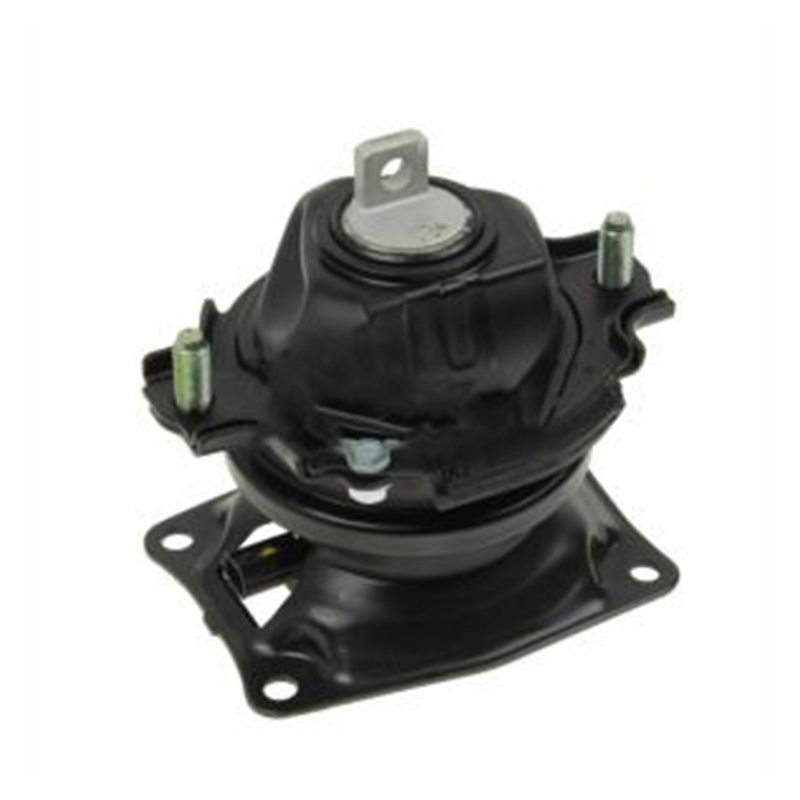
Hydraulic engine mounts survive sub-zero weather by using a carefully balanced glycol-based damping fluid, controlled fill ratio, and rubber diaphragm design that can absorb volume change without rupturing. The real goal is not just “avoid freezing,” but keep viscosity stable, prevent ice crystals or slush, and preserve damping force at -40°C without overloading the internal membrane. In practice, the blend, sealing quality, and air content matter as much as the base fluid itself.
Part of the Engine Mounts, Gaskets and Sealing Guides.
What makes a hydraulic mount fail in extreme cold?
A hydraulic mount fails in extreme cold when the internal fluid thickens, expands, or loses flow consistency faster than the rubber diaphragm can compensate. That can create pressure spikes, poor damping, or even membrane damage.
The failure is usually not one single event. It starts with sluggish rebound, then harsh idle vibration, then hardening of the mount response, and in worse cases a split membrane or seepage at the crimp area. In our field experience, the mount often survives the first cold start but fails after repeated freeze-thaw cycling, which is when seal fatigue becomes visible.
Why is glycol-water blend used instead of pure water?
Glycol-water blends are used because water alone freezes too early, expands sharply on freezing, and can burst confined cavities. Ethylene glycol lowers the freezing point and improves low-temperature fluid behavior.
Pure glycol is not always the best answer either. At very high concentration, freeze performance can rebound and viscosity can rise too much, which makes damping overly stiff. The practical sweet spot is usually a controlled mixture tuned to the climate and the mount’s internal volume.
Which concentration works best at -40°C?
For a -40°C target, the blend is usually pushed into the severe-winter range rather than simply increasing glycol to the maximum. In many production contexts, around 55% ethylene glycol and 45% water is a strong starting point for dependable freeze protection near -40°C.
A higher glycol ratio can sound safer, but the fluid curve is not linear. Too much glycol can reduce the lowest-freeze advantage and increase pumping resistance inside the mount. That matters because the fluid must still move quickly enough to damp vibration during engine shake.
Mr. Fast often treats this as a sourcing decision, not just a chemistry decision. For cold-climate programs, a few percentage points can decide whether the mount stays compliant or becomes harsh on startup.
How does the diaphragm survive fluid expansion?
The diaphragm survives expansion by acting as an elastic volume compensation chamber. When temperature drops and the fluid contracts, the membrane moves to absorb the change; when the fluid warms, it flexes back without letting pressure rise to destructive levels.
The key is having enough free stroke in the membrane and enough headspace in the cavity. If the fill volume is too high, there is no room for contraction-expansion cycling, and the internal pressure can climb fast enough to deform the rubber or force leakage through the seal.
Does silicone fluid solve the freezing problem?
Silicone fluid has excellent cold-flow behavior and stays more stable across a wide temperature range, but it is not always the best direct substitute for glycol-water in every hydraulic mount design. It may offer lower temperature sensitivity, but compatibility, damping tuning, and cost can become limiting factors.
In some mounts, silicone fluid improves smoothness at low temperature. In others, the change in compressibility and damping curve creates a different mount feel that OEM tuning did not intend. That is why fluid choice must match the mount geometry, rubber compound, and target NVH response, not just the freeze point.
What controls burst resistance inside the mount?
Burst resistance depends on membrane thickness, rubber formulation, crimp integrity, fill volume, and fluid expansion allowance. If any one of those is weak, the mount can fail even if the fluid itself does not freeze solid.
In real production, we watch three things first: the diaphragm durometer, the crimp seal consistency, and the fill ratio. A mount with perfect chemistry but poor sealing will still fail under cold soak, because repeated thermal contraction pulls on the weak point every cycle.
Why does air content matter so much?
Air content matters because trapped air expands and compresses much more than liquid, which changes pressure behavior in a sealed hydraulic mount. Excess air can create unstable damping, inconsistent idle isolation, and unpredictable cold-weather response.
A small controlled headspace is necessary, but uncontrolled entrained air is harmful. That is why degassing, fill-control, and cycle testing are not optional steps. A mount with too much entrained air may appear fine at room temperature and then become noisy or harsh after overnight freeze.
How do manufacturers verify cold performance?
Manufacturers verify cold performance through freeze soak, compression cycling, leakage inspection, and rebound testing. A mount should be tested at or below the intended climate target, often with multiple cycles rather than a single exposure.
A practical test sequence includes:
-
Cold soak to the target temperature.
-
Start-up vibration check.
-
Repeated deflection cycles under load.
-
Seal and diaphragm inspection after thaw.
-
Leak check and damping recovery measurement.
This is where Mr. Fast pays attention to repeatability, not just pass/fail. One mount that survives one cold soak is not enough; consistency across a batch is what protects fleet and workshop customers.
What blend failures show up in the field?
Blend failures usually show up as hard idle, delayed recovery after engine movement, seepage, or a rubber membrane that looks swollen or stressed. In very cold regions, the first complaint may be “the mount feels solid until the car warms up.”
The most common field mistake is using a blend that passes a bench freeze test but fails in real vehicle duty because the mount sees vibration, heat cycling, and pressure spikes. The internal fluid does not live in a static bottle; it lives inside a moving structure.
Which sourcing details matter most for buyers?
Buyers should ask about concentration tolerance, cold-soak test method, rubber compatibility, and batch consistency. A low-cost fill fluid can be expensive if it creates returns in the first winter.
Here is the sourcing logic we use in practice:
For OEM, fleet, and aftermarket programs, Mr. Fast recommends locking these points in before volume purchase. If the fluid spec is loose, the mount may work in the lab and fail in distribution.
Can silicone and glycol be mixed casually?
No, they should not be mixed casually. Different fluid chemistries can separate, alter damping, or attack seals if the system was not designed for them.
A mount tuned for glycol-water behavior expects a specific viscosity and thermal response. If a supplier swaps in another fluid just to chase low-temperature performance, the resulting product may feel wrong in the car and create long-term seal issues. That risk is especially high in private-label sourcing, where the external appearance looks correct but the internal response changes.
Mr. Fast Expert Views
“In cold-climate sourcing, we do not judge hydraulic mounts by the fluid alone. We judge the whole system: glycol ratio, diaphragm stroke, headspace, seal quality, and cycle stability. In our production and sourcing work, the best results come from conservative fill control and tight batch testing, not from pushing one ingredient to the limit. Mr. Fast has found that the most reliable winter mounts are the ones designed for thermal movement first and chemistry second.”
FAQs
Can a hydraulic mount freeze solid at -40°C?
It can partially stiffen or form slush if the blend is wrong, but a correctly formulated glycol-water system should stay functional and not burst the diaphragm.
Is a higher glycol ratio always better?
No. Too much glycol can raise viscosity and reduce damping comfort, so the optimal ratio is a balance, not a maximum.
Why do some mounts fail after thawing?
Cold cycling can weaken the diaphragm or seal, so damage may appear only after the fluid expands and contracts several times.
Does silicone fluid outperform glycol in every case?
No. Silicone can improve low-temperature stability, but it may require a different mount design and cost structure.
What is the biggest sourcing mistake?
Assuming one freeze test is enough. Batch consistency, seal durability, and real vehicle cycling matter just as much as the fluid recipe.
Conclusion
The best way to keep a hydraulic mount safe in sub-zero conditions is to design the entire internal system for thermal movement, not just choose a fluid that “sounds cold-proof.” The glycol-water ratio, membrane stroke, air content, and seal quality all work together to prevent freezing, overpressure, and rupture.
For -40°C applications, a disciplined blend strategy around the severe-winter range, backed by cycle testing and tight fill control, is far more reliable than chasing the coldest number on paper. That is why buyers, engineers, and distributors should treat internal damping media as a system-level sourcing decision. In that kind of program, Mr. Fast focuses on consistency, durability, and winter-ready performance from the first batch onward.
Related articles
 Before You Reset a Check Engine Light, Check Diagnostic and Readiness StatusKnowledge
 Exhaust Manifold Gasket Orientation: When the Metallic Face MattersKnowledge
 Exhaust Clamps: Choose for the Pipe Joint, Not Diameter AloneKnowledge
 Brake Light Switch Replacement: Check the Adjuster Design Before Handling ItKnowledge

