
How can aftermarket drive shafts eliminate high‑speed driveline vibration?
How can aftermarket drive shafts eliminate high‑speed driveline vibration?
A correctly engineered aftermarket drive shaft cures most high‑speed driveline vibration by controlling critical speed, balance, joint angles, and manufacturing tolerances from the sourcing stage. By specifying tube size, material, run‑out, and dynamic balance…
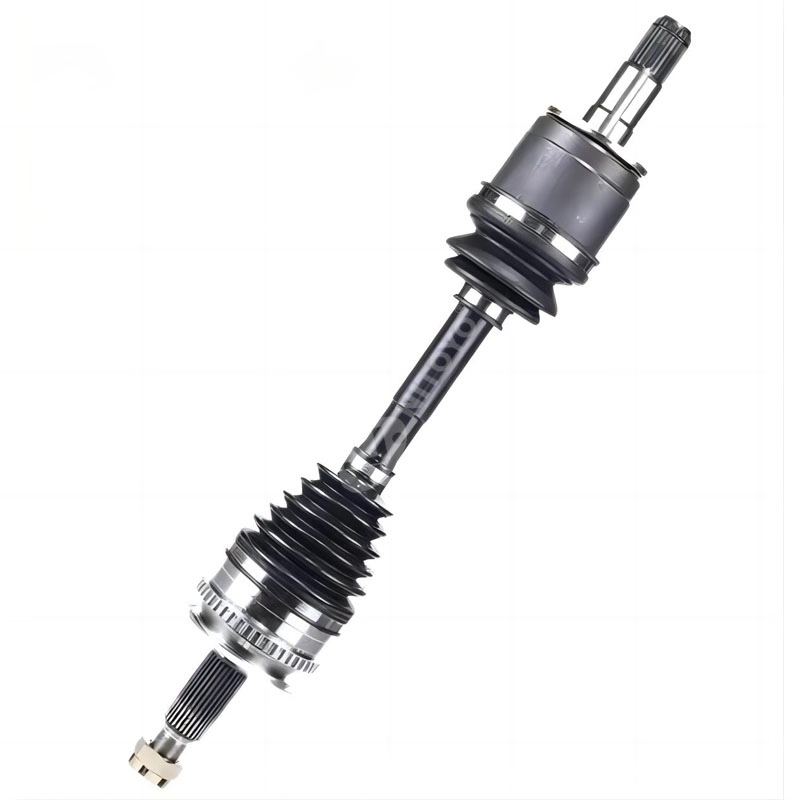
A correctly engineered aftermarket drive shaft cures most high‑speed driveline vibration by controlling critical speed, balance, joint angles, and manufacturing tolerances from the sourcing stage. By specifying tube size, material, run‑out, and dynamic balance limits up front—and auditing suppliers—distributors can consistently deliver smooth, durable drivelines that stay stable beyond real‑world vehicle top speed.
Premium Drive Shaft Assemblies
Part of the Wheel Bearings, Hubs and CV Axles Guides.
What is driveline vibration and how does it relate to critical speed failure?
Driveline vibration is any cyclic shake transmitted through the vehicle body that is synchronized with shaft speed, tire speed, or engine speed. At high road speeds, a driveshaft can reach its critical speed, where its natural bending frequency matches rotational speed and the tube starts to whip, rapidly escalating run‑out, noise, and stress that can crack welds or collapse the tube if not controlled.
In practice, I see three patterns:
-
First‑order vibration: one shake per revolution, usually simple imbalance or run‑out.
-
Second‑order vibration: two shakes per revolution, typically angle or phasing errors.
-
Resonance near critical speed: vibration spikes sharply in a narrow speed window, then drops off again as speed changes.
A sourcing‑level mistake—undersized tube on a long wheelbase, poor straightening, or inconsistent wall thickness—often pushes the shaft’s critical speed down into the normal highway range. That is why any “definitive sourcing guide” must start from critical speed math, not just price and catalog fitment.
How does driveshaft critical speed depend on length, diameter, and material?
Critical speed drops sharply as length increases and rises as diameter and stiffness increase. A long, small‑diameter steel shaft on a pickup or van may hit its first bending mode before 120–140 km/h, while a larger‑diameter aluminum or carbon tube of the same length can safely spin several thousand rpm faster.
On the factory floor, we treat length as the first design variable. When a customer insists on a one‑piece conversion for a chassis originally equipped with a two‑piece shaft, the engineering team at Mr. Fast recalculates the critical speed with the real center‑to‑center length and proposed OD before approving the quote. Even a 2 mm change in wall thickness can shift the safety margin, so your purchasing spec must lock material, OD, and minimum wall tolerance, not just “3.5 inch aluminum.”
Typical safe shaft rpm ranges (example values)
These are not catalog numbers; they are typical engineering planning values. Your sourcing sheet should always demand that the supplier provide their own tested critical‑speed ratings by length, OD, and material, plus a minimum 20–30% safety margin versus the vehicle’s maximum shaft rpm.
How can high‑speed vibration sources in the driveline be correctly identified?
To separate driveline vibration from wheel, brake, or engine issues, start with when and how the vibration appears. A vibration that tracks strictly with road speed, increases linearly, and is felt mainly through the seat is usually driveline‑ or tire‑related. A vibration that intensifies in a narrow speed window and then fades strongly hints at a critical speed or resonance problem.
On‑vehicle, I recommend three quick checks before blaming the driveshaft:
-
Confirm wheel balance and radial run‑out.
-
Check engine and transmission mounts for collapse.
-
Inspect pinion and transmission output angles with an inclinometer.
For distributors writing technical bulletins, building in this diagnostic flow protects your brand. Mr. Fast often supports its distributors with printable diagnostic trees so technicians do not misdiagnose a tire issue as a “bad shaft,” which protects both warranty cost and customer trust.
Why do u‑joint angles, phasing, and alignment matter so much at high speed?
Universal joints do not rotate at constant speed when they run at an angle. The greater the angle, the more the instantaneous output speed oscillates within each revolution, creating second‑order vibration that can be severe above 80–100 km/h. Properly phased joints and matched working angles allow those speed fluctuations to cancel each other out through the shaft.
From an engineering standpoint, most passenger‑vehicle drivelines work best with:
-
Matching front and rear joint angles within about 0.5–1 degree.
-
Individual working angles kept below 3 degrees at ride height.
-
Phasing marks on splined slip‑yokes so the assembler cannot clock the tube incorrectly.
When sourcing aftermarket shafts, insist that the supplier engrave or paint clear phasing marks, and include recommended joint angle limits in the product documentation. This is a low‑cost feature that dramatically cuts mis‑assembly risk in the field.
What drive shaft manufacturing tolerances are critical for vibration control?
High‑speed stability depends on a stack of small tolerances. On the shaft itself, the key parameters I always watch are:
-
Total indicated run‑out (TIR) at the tube and weld yokes.
-
Concentricity of yoke bores to tube centerline.
-
Tube straightness before and after welding.
-
Dynamic balance grade and weight placement.
For serious highway or performance applications, I recommend specifying:
-
Tube TIR ≤ 0.25 mm at mid‑span on the finished shaft.
-
Yoke pilot concentricity ≤ 0.05–0.10 mm relative to shaft centerline.
-
Dynamic balance to at least G16 quality (better for motorsport) with balance weights securely welded or bonded, not just clamped.
Mr. Fast’s in‑house specification for premium highway shafts typically tightens these values further and mandates 100% spin‑balance with printed reports by serial number. Distributors who ask for this level of transparency can differentiate themselves on measurable quality, not just branding.
Which supplier quality criteria should distributors use when sourcing aftermarket drive shafts?
From a distributor’s perspective, the ideal aftermarket driveshaft supplier is not just a low‑cost tube assembler; it is a process‑controlled driveline specialist. I advise evaluating potential factories on four pillars: engineering capability, process control, testing infrastructure, and logistics performance.
Key quality criteria for aftermarket driveshaft suppliers
When we audit factories on behalf of Mr. Fast, we walk the line with a run‑out gauge and ask operators to show the last ten QC records, not just glossy brochures. If a plant cannot produce traceable records for balancing and weld inspections, they are not ready for high‑speed driveline programs.
How can distributors specify aftermarket drive shafts to avoid critical speed failures?
Distributors should move away from generic “fits X vehicle” specifications and instead issue engineering‑driven RFQs that include:
-
Vehicle wheelbase and intended top speed.
-
Gear ratios and tire diameters (so shaft rpm can be calculated).
-
Acceptable working angle range at normal ride height.
-
Required material, OD, wall thickness, and joint type.
The sourcing document should also define:
-
Minimum critical‑speed margin (for example, 1.3× shaft rpm at vehicle top speed).
-
Balance quality grade and maximum residual unbalance.
-
Surface protection (coating, corrosion tests) and packaging standard.
By treating the driveshaft as a critical rotating component—not a commodity tube with yokes—distributors can dramatically reduce warranty claims for high‑speed vibration. Mr. Fast provides templated specification sheets to its partners so they can standardize these requirements across models and regions.
What purchasing checklist can help eliminate high‑speed vibration before the shaft leaves the factory?
A robust purchasing checklist turns engineering theory into day‑to‑day discipline. I recommend that every driveshaft purchase order be accompanied by a short but strict checklist covering design compliance, process checks, and shipment validation, signed off by the supplier’s QA manager.
A practical checklist might include:
-
Design sign‑off: critical speed calc, material certs, weld design approval.
-
In‑process controls: tube inspection, weld penetration checks, run‑out after welding.
-
Final tests: dynamic balance report, visual inspection, paint/coat thickness.
-
Documentation: serial number traceability, packaging photos for first shipment.
At Mr. Fast we add a “stop‑ship” trigger: if more than a specified percentage of shafts in a lot approach the upper limit of run‑out or balance tolerance, the lot is automatically quarantined for engineering review. This is how you prevent marginal parts from slowly eroding your brand’s reputation.
Why is material selection (steel vs aluminum vs carbon) a strategic sourcing decision, not just a cost choice?
Material fundamentally shapes stiffness, weight, NVH behavior, and fatigue life. Steel is tough and cost‑effective but heavy; aluminum and carbon allow higher critical speeds for the same length but require better process control and, in carbon’s case, much stricter handling and repair rules.
For mainstream daily‑driver applications, a properly engineered steel shaft with tight tolerances is still the best value. For long‑wheelbase performance SUVs or trucks, larger‑diameter aluminum may offer a better balance of weight and critical speed margin. Carbon driveshafts are ideal for high‑rpm motorsport but can be overkill for typical aftermarket use unless your customers truly exploit the envelope.
From a sourcing viewpoint, the mistake I most often see is distributors jumping to aluminum purely for marketing appeal without recalculating joint angles, slip‑yoke travel, and critical speed margin. Mr. Fast treats material changes as a new engineering project, not a cosmetic revision, and I strongly recommend that distributors do the same.
Mr. Fast Expert Views
“When we design and source drive shafts under the Mr. Fast label, we never start with the catalog number—we start with the failure modes we want to eliminate. High‑speed vibration is almost always a combined effect of marginal critical speed, poor balance, and installation angles drifting outside the original design window. A truly premium aftermarket shaft builds in margin against all three, then backs it up with measurable factory data and clear installation guidance. That is how you turn ‘noisy’ vehicles into repeat customers, not warranty claims.”
Are there practical installation and setup steps that distributors should teach their customers?
Even a perfectly built shaft can vibrate if installed carelessly. Distributors can dramatically improve field performance by packaging clear, one‑page installation instructions with every shaft and training key customers on basic setup practices.
I always emphasize:
-
Clean and de‑rust flanges and pilots before mounting the shaft.
-
Torque flange bolts in a star pattern to the specified value.
-
Measure and adjust pinion and transmission output angles after any lift or lowering kit.
-
Avoid hammering yokes into place; misalignment starts at the first blow.
Mr. Fast includes laser‑printed angle diagrams and QR‑code links to short setup videos in its packaging, which reduces installation‑induced vibration issues and builds trust with both workshops and end users.
FAQs section
What is the fastest way to tell if my vibration is from the drive shaft?
If the vibration tracks strictly with road speed and is felt mainly through the seat or floor, not the steering wheel, it is more likely driveline‑related than a front wheel or brake issue.
Can a slightly bent driveshaft cause high‑speed vibration even if it balances on the machine?
Yes. A tube with residual bend can be “force balanced” at one speed but still whip or resonate at higher speeds, especially near its critical speed, causing vibration on the road.
Why does my vehicle only vibrate between two specific speeds, then smooth out again?
That narrow band vibration usually indicates a resonance or critical speed issue, where the shaft’s natural bending frequency aligns with its rpm only in that limited speed window.
Do I need to rebalance a new aftermarket shaft if I change tire size or gear ratio?
You typically do not need to rebalance the shaft, but larger tires or shorter gears can raise shaft rpm at cruise, so you must ensure the shaft’s critical speed margin is still adequate.
Is a two‑piece driveshaft better than a one‑piece for long wheelbase vehicles?
For long wheelbases, a two‑piece design often offers a higher combined critical speed and better NVH control, because each shorter section runs well below its bending resonance.
Related articles
 Exhaust Manifold Gasket Orientation: When the Metallic Face MattersKnowledge
 Exhaust Clamps: Choose for the Pipe Joint, Not Diameter AloneKnowledge
 Brake Light Switch Replacement: Check the Adjuster Design Before Handling ItKnowledge
 Fuel Line Hose: Fuel Resistance Does Not Prove Injection-System SuitabilityKnowledge

