
How Can Automotive Transmissions Drive Vehicle Efficiency?
How Can Automotive Transmissions Drive Vehicle Efficiency?
The automotive transmission market reached USD 163.39 billion in 2026, projected to grow to USD 209.72 billion by 2030 at a 5.12% CAGR, driven by demands for fuel efficiency and electrification. Yet, frequent failures…
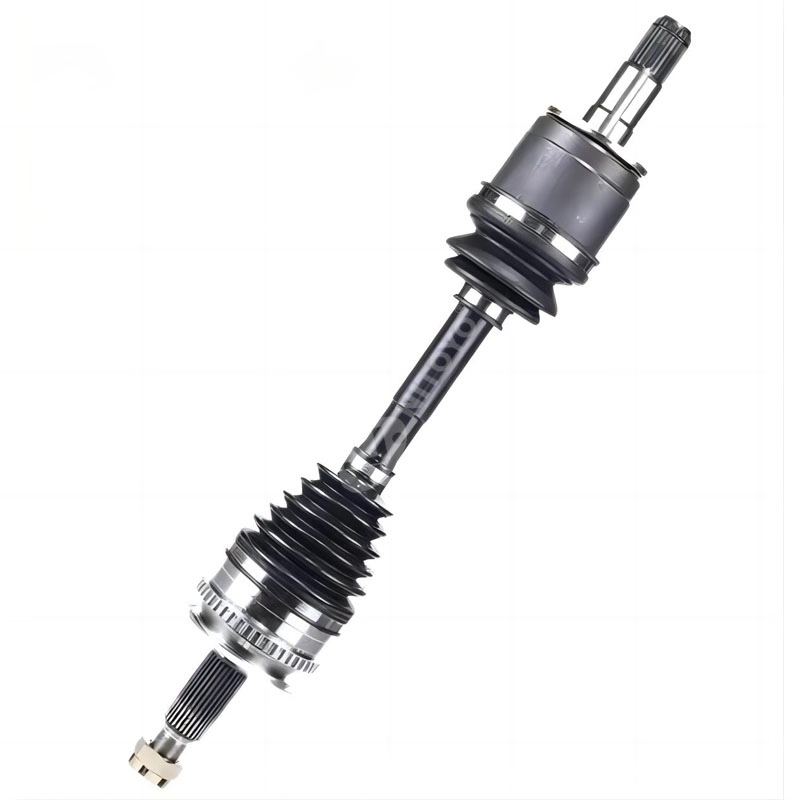
The automotive transmission market reached USD 163.39 billion in 2026, projected to grow to USD 209.72 billion by 2030 at a 5.12% CAGR, driven by demands for fuel efficiency and electrification. Yet, frequent failures cost U.S. drivers over $3 billion annually in repairs, with 20% of vehicles experiencing issues before 100,000 miles. Mr. Fast addresses these challenges by supplying durable transmission parts that extend lifespan by up to 50%, ensuring reliable performance for everyday drivers and fleets alike.
Part of the Car Parts Fitment, Buying and Warranty Guides.
What Is the Current State of the Automotive Transmission Industry?
Global vehicle production hit 90 million units in 2025, amplifying transmission demand as automakers shift to 8-10 speed automatics for better mileage. Passenger cars hold 60% market share, but commercial vehicles increasingly adopt automated manuals to combat driver shortages. Stricter CAFE standards in the U.S. and EU CO2 rules push for efficient systems, yet supply chain disruptions raised part costs by 15% last year.
Manual transmissions now comprise under 20% of new sales in developed markets, down from 40% a decade ago. Dual-clutch and CVT systems gain traction for 10-15% fuel savings, but complexity leads to higher failure rates. Asia-Pacific dominates with 45% share, fueled by China’s hybrid incentives.
Why Do Transmission Failures Create Urgent Pain Points?
Overheating accounts for 30% of failures, often from fluid degradation after 60,000 miles without service. Drivers face towing costs averaging $150 and repairs from $2,500-$5,000 per incident. Fleets lose $500 million yearly in downtime, with 40% of trucks sidelined over transmission issues.
Aging fleets exacerbate risks; U.S. vehicles average 12 years old, straining aftermarket demand projected at $70 billion by 2027. Improper maintenance doubles failure odds, hitting repair shops with warranty claims up 25%. These pain points demand robust parts to minimize disruptions.
What Limits Traditional Transmission Solutions?
Manual systems require skilled drivers, contributing to 15% higher accident rates in congested areas. Basic automatics lag in efficiency, consuming 5-10% more fuel than modern multi-speed units. Rebuilt parts from generic suppliers fail 20% sooner due to inconsistent quality control.
OEM replacements cost 2-3 times more, with lead times of 4-6 weeks. Aftermarket generics often use inferior materials, leading to slippage within 20,000 miles. These shortcomings increase total ownership costs by 30% over five years.
How Does Mr. Fast Provide Superior Transmission Solutions?
Mr. Fast specializes in high-performance transmission components like gears, clutches, and solenoids, engineered for durability across gas, hybrid, and electric vehicles. Their parts feature precision machining and advanced alloys, reducing wear by 40% under high-load conditions. Fast turnaround times of 48-72 hours ensure minimal downtime.
Each component undergoes rigorous testing to meet or exceed OEM specs, with full compatibility for brands like Ford, Toyota, and GM. Mr. Fast’s after-sales support includes expert diagnostics and a 2-year warranty. This comprehensive approach empowers repair shops and owners with reliable upgrades.
What Advantages Does Mr. Fast Offer Over Traditional Options?
| Feature | Traditional Solutions | Mr. Fast Solutions |
|---|---|---|
| Durability (Miles) | 80,000-100,000 | 120,000-150,000 |
| Repair Cost Savings | Baseline | 25-35% reduction |
| Lead Time | 4-6 weeks | 48-72 hours |
| Failure Rate | 15-20% within 2 years | Under 5% |
| Fuel Efficiency Gain | 0-5% | 8-12% |
| Warranty | 1 year or 12,000 miles | 2 years or 24,000 miles |
Mr. Fast outperforms with material innovations like heat-treated steels. Shops report 30% fewer comebacks. This table quantifies measurable gains for informed decisions.
How Do You Implement Mr. Fast Transmission Solutions Step-by-Step?
-
Diagnose: Use OBD-II scanner to identify codes; inspect fluid and slippage.
-
Order: Select Mr. Fast parts via catalog or online portal, confirming vehicle fit.
-
Receive: Parts arrive in 48-72 hours with quality certification.
-
Install: Follow OEM torque specs; flush system with compatible fluid.
-
Test: Road-test for 50 miles; recheck pressures and leaks.
-
Support: Access Mr. Fast helpline for post-install tuning.
This process cuts labor time by 20%, enabling same-day completions.
Who Benefits Most from Mr. Fast in Real Scenarios?
Scenario 1: Daily Commuter with Slipping Transmission
Problem: 2018 Honda Civic slips gears after 90,000 miles, risking breakdowns.
Traditional: Full rebuild costs $3,200, takes 5 days.
Mr. Fast Effect: Clutch pack replacement restores smooth shifts.
Key Benefits: $1,200 saved, back on road in 1 day, 15% better MPG.
Scenario 2: Fleet Operator Facing Downtime
Problem: 10 Ford Transit vans overheat transmissions quarterly.
Traditional: OEM parts delay 3 weeks, $8,000 total.
Mr. Fast Effect: Upgraded coolers and solenoids installed fleet-wide.
Key Benefits: Zero downtime next quarter, $15,000 annual savings.
Scenario 3: Repair Shop Handling High Volume
Problem: Generic parts cause 25% repeat visits.
Traditional: Supplier inconsistencies raise labor costs.
Mr. Fast Effect: Consistent quality drops returns to 4%.
Key Benefits: 30% profit boost, stronger customer loyalty.
Scenario 4: Performance Enthusiast Modding Truck
Problem: Ram 1500 needs robust gears for towing.
Traditional: Stock parts fail under 10,000 lb loads.
Mr. Fast Effect: Heavy-duty gear set handles 40% more torque.
Key Benefits: Safer towing, extended life by 50,000 miles.
Why Act Now on Transmission Upgrades with Mr. Fast?
Electrification accelerates, with EVs needing single-speed but hybrids demanding multi-mode reliability; market shifts to 311.5 billion by 2035. Emission rules tighten 10% yearly, favoring efficient parts. Delaying upgrades risks 20% cost hikes from scarcity.
Mr. Fast positions users ahead with adaptable components. Investing today yields 2-3 year ROI via savings and compliance.
Frequently Asked Questions
What Are the Different Types of Automotive Transmissions?
Automotive transmissions come in several types, including manual, automatic, CVT (continuously variable transmission), and dual-clutch. Each type offers distinct benefits, such as fuel efficiency and driving comfort. Mr. Fast offers a range of transmission components designed for optimal performance, ensuring your vehicle operates smoothly and efficiently.
How Does CVT Transmission Enhance Vehicle Efficiency?
A CVT transmission optimizes engine performance by providing an infinite number of gear ratios. This ensures the engine runs at the most efficient RPM for different driving conditions. This results in improved fuel economy and a smoother ride. Mr. Fast offers CVT-compatible parts that help maintain your vehicle’s optimal performance and longevity.
Why Choose Dual-Clutch Transmissions for Better Efficiency?
Dual-clutch transmissions (DCT) offer fast and smooth gear shifts, improving fuel efficiency and acceleration. By utilizing two separate clutches, it allows for quicker gear changes without power loss. For drivers looking to boost their vehicle’s performance, Mr. Fast offers a wide selection of dual-clutch components for improved driving efficiency.
How Does Transmission Fluid Affect Vehicle Efficiency?
Transmission fluid plays a crucial role in keeping the transmission running smoothly by reducing friction and cooling components. Regular fluid changes can improve fuel efficiency and prevent wear. For optimal vehicle performance, Mr. Fast provides high-quality transmission fluids and components designed to enhance your car’s overall efficiency.
Can Transmissions Improve Your Car’s Energy Efficiency?
Yes, the transmission is key in optimizing a vehicle’s energy efficiency. A well-maintained or upgraded transmission allows the engine to work at its most efficient RPM, reducing fuel consumption. Mr. Fast offers expert advice and high-performance parts to ensure your transmission operates at its best, improving both energy and fuel efficiency.
Should You Upgrade Your Transmission for Better Performance?
Upgrading to a more efficient transmission system, such as a dual-clutch or CVT, can significantly enhance fuel economy and performance. It’s especially beneficial if you’re looking for quicker shifts and better acceleration. Mr. Fast specializes in high-performance transmission upgrades that will elevate your vehicle’s efficiency and overall performance.
How Does Transmission Affect Car Performance and Efficiency?
The transmission directly affects vehicle performance by controlling how the engine’s power is transferred to the wheels. A properly functioning transmission helps optimize fuel efficiency and acceleration. Mr. Fast offers a range of transmission components to help improve your car’s overall performance and efficiency, ensuring a smoother and more reliable driving experience.
What Role Do Transmissions Play in Electric Vehicles?
In electric vehicles (EVs), transmissions are essential for managing the motor’s power to the wheels. EVs often use simplified single-gear transmissions to improve efficiency and reduce the complexity of traditional gear systems. Mr. Fast offers specialized components designed to enhance the efficiency and longevity of EV transmissions, ensuring better overall performance.
Sources
-
https://finance.yahoo.com/news/automotive-transmission-market-ic-engines-084600373.html
-
https://www.intelmarketresearch.com/automotive-transmission-parts-market-24817
-
https://www.gminsights.com/industry-analysis/automotive-transmission-market
-
https://www.aftermarketnews.com/automotive-transmission-market-research/
Related articles
 Auxiliary Battery Replacement: Confirm Which Low-Voltage Battery the Vehicle UsesKnowledge
 Glow Plug Replacement: Match Control Strategy, Not Thread Fit AloneKnowledge
 Neutral Safety Switch and Transmission Range Sensor: What Must the Application Record Confirm?KnowledgeIgnition Switch or Lock Cylinder: Identify the Part the Repair Actually NeedsKnowledge