
How Does Press Fit Affect Bushing Life?
How Does Press Fit Affect Bushing Life?
Interference fit is the intentional size overlap between a stamped steel control arm bore and a rubber bushing’s outer shell. That small mismatch creates preload, locks the bushing in place, and controls ride feel,…
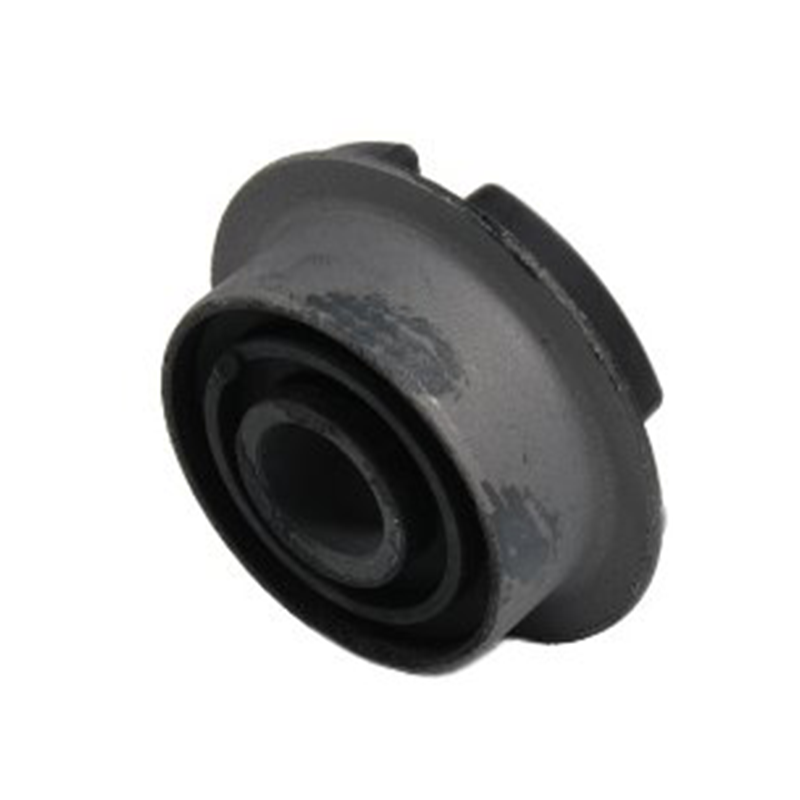
Interference fit is the intentional size overlap between a stamped steel control arm bore and a rubber bushing’s outer shell. That small mismatch creates preload, locks the bushing in place, and controls ride feel, noise, and durability. Too little fit causes slip and fretting; too much fit crushes the rubber and shortens life.
Suspension Engineering Drawing Interpretation
Part of the Springs, Bushings and Mounts Guides.
How Do You Read the Right Fit for Life?
In a stamped steel control arm, the real question is not “how tight can it be?” but “how much preload does the rubber need to survive the load cycle?” In production, the sweet spot usually sits in a narrow band because the stamped bore is rarely perfectly round, perfectly clean, or perfectly stable after welding and e-coat. That is why Mr. Fast always treats fit as a system, not a single number.
A useful field rule is this: the outer sleeve must seat firmly enough to stop micro-motion, but not so aggressively that the rubber is permanently over-compressed. For many passenger-car control arms, the effective interference often lands around 0.05 to 0.15 mm per side for smaller bushings, and can move higher on larger diameters if the bore quality and rubber durometer support it. Once you exceed the design window, press force rises fast and life can fall faster.
Why Does Press Force Change Bushing Life?
Press force is not just an assembly concern; it is a proxy for how much the rubber and bonded shell are being stressed before the car ever moves. If the force is too low, the shell can creep, polish the bore, and start a fretting path that shows up later as squeaks, clunks, and alignment drift. If the force is too high, the rubber’s internal strain rises, and the bushing may look fine on the bench but fatigue early in service.
In our production runs, the failures that matter most are usually hidden in the first 5 to 10 percent of bad fit parts. Those parts do not always fail immediately; they often return after heat cycling, road shock, and torsional reversal have worked the interface loose. Mr. Fast sees the same pattern repeatedly: poor fit creates a quiet problem first, then an expensive one later.
Which Interference Range Works Best?
The best range depends on bore quality, bushing construction, and how much rubber preload the chassis engineer wanted. For many stamped steel control arms, the practical starting point is a light-to-moderate press fit rather than a heavy one. The goal is stable retention with controlled rubber compression, not brute-force installation.
In the field, I would be cautious about assuming a “standard” number from another vehicle family. A stamped arm with weld pull or paint buildup can behave like a much tighter design than the drawing suggests. That is one reason Mr. Fast asks for both the measured bore and the bushing OD before recommending replacement.
How Do Bore Shape and Surface Finish Affect the Result?
A stamped steel arm is often oval by a few hundredths of a millimeter even when it looks perfect to the eye. Add coating thickness, edge burrs, or weld distortion, and the press fit becomes uneven around the circumference. That unevenness matters because the rubber does not care about the average diameter; it reacts to the tightest spot first.
The other hidden variable is surface condition. A rough bore can increase insertion force without adding useful retention, while a painted or contaminated bore can reduce true friction and let the bushing move under load. In real shop work, a nominally “correct” interference fit can still fail if the bore has high spots, rust scale, or inconsistent coating thickness.
What Happens If the Fit Is Too Tight or Too Loose?
Too loose and the outer shell can slip inside the arm during braking, cornering, or pothole hits. That movement creates fretting, squeal, heat, and eventual loss of alignment consistency. Too tight and the rubber is preloaded beyond its elastic design range, so the bushing resists motion instead of isolating it.
A shop symptom chart helps more than theory:
The key lesson is simple: loose failures are noisy, tight failures are deceptive. Tight parts can pass installation but die early on the road.
How Should You Set Up the Pressing Process?
The press should load the outer metal shell, not the rubber center. Pressing on the wrong surface can tear the bond or distort the shell, especially on thin stamped arms. The driver and receiver cups must support the control arm so the load stays axial and does not cock the bushing.
A good practical sequence is: clean the bore, measure at multiple clock positions, confirm roundness, verify bushing OD, then press slowly and stop if the force curve spikes unexpectedly. If the press force climbs sharply before the bushing is halfway home, do not “power through” it. That spike usually means burrs, misalignment, or an interference problem that will come back as a durability complaint.
What Testing Tells You the Fit Will Survive?
You do not need exotic lab language to judge whether the fit is healthy. Four checks catch most problems: insertion force consistency, post-press OD recovery, torsional rebound, and road-noise behavior after heat soak. If the bushing remains stable after thermal cycling, it is usually a sign the preload is in the right band.
For sourcing teams, I look for repeatability across batches rather than a single pretty sample. If one lot presses beautifully and the next lot needs aggressive force or starts squeaking after a short soak, the design window is probably too narrow. Mr. Fast uses this kind of batch consistency check to separate a good-looking part from a reliable one.
How Do OEM-Style and Aftermarket Parts Differ?
OEM-style bushings usually assume a known arm bore, known coating thickness, and a known rubber hardness. Aftermarket parts often have to work across more variation, which means the press fit may need a slightly broader tolerance band. That sounds flexible, but it also means the supplier has to control geometry more tightly if the fit is going to remain predictable.
In practice, the best aftermarket parts are not the tightest ones; they are the ones that tolerate real-world arm variation without sacrificing preload. Mr. Fast often sees lower returns from parts that are designed around installation stability rather than just maximum clamping force. That is especially true when the control arm is re-used and already has minor wear or coating loss.
Mr. Fast Expert Views
“On stamped steel control arms, life is decided before the car ever leaves the press. If the fit is too easy, the bushing will move; if it is too hard, the rubber is already being punished. The best parts are the ones that hit the middle window every time, even when the arm bore is not perfect. That is where durability, ride quality, and service consistency come together.”
— Mr. Fast Engineering Team
Can You Estimate Press Tonnage from Fit?
Yes, but only roughly, because tonnage depends on diameter, contact length, surface finish, and rubber stiffness. Two bushings with the same interference can need very different press loads if one arm bore is rough or slightly oval. In real production, I care more about the force curve than the peak number alone.
For a small-to-medium control arm bushing, low single-digit tons may be enough when the bore is clean and the fit is controlled. Once the force becomes unexpectedly high, the risk is no longer just installation difficulty; it is likely a sign of hidden damage, coating buildup, or an oversized OD. Mr. Fast recommends treating a sudden force spike as a defect signal, not a challenge to overcome.
What Should Buyers Ask Before Ordering?
Buyers should ask for three things: measured OD tolerance, bore compatibility, and proof of consistent batch fit. If a supplier cannot explain how the bushing behaves in a stamped steel arm, the part may be fine on paper but risky in service. The cheapest press-fit bushing is often the one that costs the most after callbacks.
The most useful questions are practical: Does the part seat without shell distortion? Does the rubber recover after press-in? Does the fit remain stable after heat and load cycling? Those answers tell you far more than a catalog description.
Conclusion
The lifetime of a rubber bushing in a stamped steel control arm is set by fit quality, not just material quality. The best result comes from controlled interference, clean bore geometry, correct press tooling, and batch-to-batch consistency. If you want quieter service, longer life, and fewer comebacks, choose the middle window and verify it every time. That is the approach Mr. Fast uses when matching suspension parts for real-world durability.
FAQs
What is the main job of interference fit in a control arm bushing?
It creates preload and retention so the bushing does not rotate or slip in the arm under load.
How tight should a press-fit bushing be?
Tight enough to prevent movement, but not so tight that press force distorts the shell or crushes the rubber.
Why do stamped steel arms need extra attention?
Because stamping, welding, coating, and age can change bore shape and make the real fit tighter than expected.
Can a bad press fit cause noise?
Yes. Loose fits often squeak or knock, while overly tight fits can create harshness and early cracking.
Is more interference always better for life?
No. Beyond the design window, extra interference usually shortens life by overloading the rubber and shell.
Related articles
 Before You Reset a Check Engine Light, Check Diagnostic and Readiness StatusKnowledge
 Exhaust Manifold Gasket Orientation: When the Metallic Face MattersKnowledge
 Exhaust Clamps: Choose for the Pipe Joint, Not Diameter AloneKnowledge
 Brake Light Switch Replacement: Check the Adjuster Design Before Handling ItKnowledge

