
DQ500 & DQ380 DSG Transmission: The Complete Service, Fluid & Fault Guide
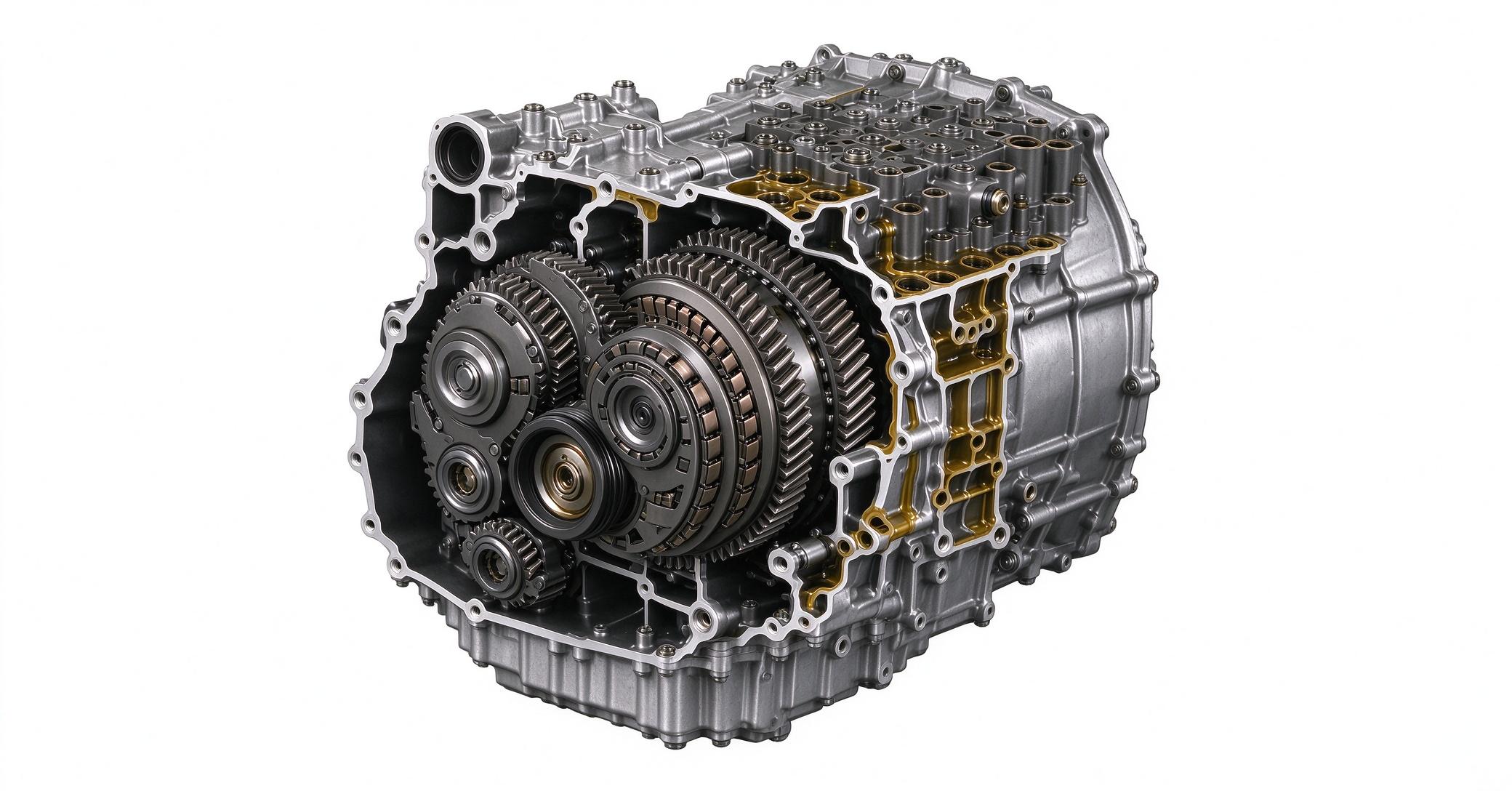
DQ500 & DQ380 DSG Transmission: The Complete Service, Fluid & Fault Guide
The seven-speed wet-clutch DSG family from the Volkswagen Group — the DQ500 and its Chinese-market sibling, the DQ380 — sits under some of the most popular vehicles in Europe, Asia and the Middle East:…
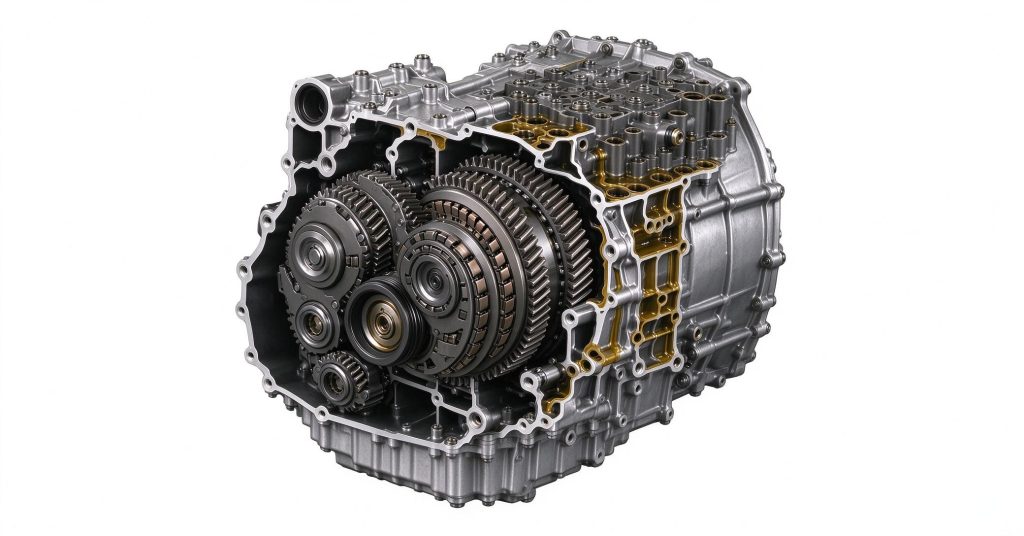
The seven-speed wet-clutch DSG family from the Volkswagen Group — the DQ500 and its Chinese-market sibling, the DQ380 — sits under some of the most popular vehicles in Europe, Asia and the Middle East: the Audi RS3 and TT RS, VW Tiguan and Teramont (Atlas), Transporter and Amarok, plus the Skoda Kodiaq and SEAT Tarraco. These gearboxes are genuinely strong, but they are not maintenance-free. Skip the scheduled oil-and-filter service and you are writing a cheque for a mechatronic replacement or a clutch-pack job that costs several times more than the service ever would.
This guide covers everything a workshop or an owner needs: what these gearboxes are, how they differ, the correct service interval, the exact fluid specifications, the six steps of a proper DSG service, the most common faults — including the famous DQ380 mechatronic sensor codes P173500 and P173600 — and how to get the repair right the first time
What Are the DQ500 and DQ380?
DQ500 (0BH / 0BT) — the strongest transverse DSG in the VW Group
Launched in 2009 (first fitted to the Transporter T5 2.0 TDI), the DQ500 was built to handle big torque and heavy vehicles. It is a seven-speed wet dual-clutch gearbox with a factory torque capacity of 600 N·m, which made it the highest-rated transverse DSG in the VW Group range. Wet means the two clutch packs run in the transmission fluid, so the fluid does far more than lubricate — it operates the clutches, feeds the mechatronic hydraulic circuit and carries heat away.
Typical applications include:
– Audi — RS3, TT RS, Q3 / Q3 Sportback
– Volkswagen — Tiguan / Tiguan Allspace, Teramont / Atlas, Transporter T5/T6, Multivan, Amarok, and some high-torque Passat / Sharan configurations
– Skoda / SEAT — Kodiaq 4×4, Tarraco
DQ380 (0DE) — the DQ500’s lighter Chinese-market version
The DQ380 appeared in the mid-2010s (2014–2015) specifically for the Chinese market. It is essentially a downsized DQ500: it shares roughly 70% of its mechanical and electrical components, weighs about 85 kg (around 10 kg lighter than the DQ500) and is rated to 420 N·m. The DQ380 (0DE) powers China-built models such as the Golf 7 GTI, Lamando, Magotan and several Passat / MQB variants with 1.8 TSI and 2.0 TSI engines.
A European-market development of the DQ380, the DQ381 (0GC), arrived in 2017 with lower-drag internals and revised lubrication, fitted to models such as the European Golf R / GTI, Octavia RS, Superb and Audi S3.
DQ500 vs DQ380 vs DQ381 at a Glance
DQ500 (0BH / 0BT)
– Introduced: 2009
– Clutch type: Wet, 7-speed
– Max torque: 600 N·m
– Weight: about 91 kg (front-wheel drive)
– Typical fitment: Audi RS3 / TT RS / Q3; VW Tiguan, Teramont, Transporter, Amarok; Skoda Kodiaq 4×4; SEAT Tarraco
– Factory fluid: G 052 182 A2 on early units, G 055 540 on later units — confirm by VIN
DQ380 (0DE)
– Introduced: 2014–2015, Chinese market
– Clutch type: Wet, 7-speed
– Max torque: 420 N·m
– Weight: about 85 kg
– Typical fitment: Golf 7 GTI (China), Lamando, Magotan, Passat MQB (China)
– Factory fluid: G 052 182 A2
DQ381 (0GC)
– Introduced: 2017, European market
– Clutch type: Wet, 7-speed
– Max torque: 420–430 N·m
– Weight: about 85 kg
– Typical fitment: Golf R / GTI (EU), Octavia RS, Superb, Audi S3
– Factory fluid: G 055 540
Key takeaway: if you work on these gearboxes, always confirm the gearbox code from the VIN before ordering fluid or parts — later DQ500 units switched from G 052 182 to G 055 540.
Why the 60,000 km DSG Service Is Non-Negotiable
On wet DSGs the ATF is not just a lubricant. It:
– pressurises the two clutch packs hydraulically,
– feeds the mechatronic unit’s solenoid control circuit,
– cools the clutch friction surfaces, and
– lubricates gears, bearings and the internal pump.
As the fluid ages it picks up wear particles, oxidises from heat, loses its friction-modifier additives and drops in viscosity. Three things then happen in quick succession:
1. Clutch slip and judder — because the friction modifiers are exhausted, the wet clutches can no longer hold cleanly.
2. Solenoid contamination — the mechatronic valves start sticking, causing delayed engagement and harsh shifts.
3. Low pump pressure — the internal oil pump loses efficiency, which can trigger warning lights and limp mode.
None of this happens overnight, and none of it is reversible by changing the fluid late. The DSG service is preventative, not remedial — by the time you feel a problem, components are already wearing.
Service Interval: How Often Should a DQ500 / DQ380 Be Serviced?
– Official VW schedule: every 60,000 km (or 4 years, whichever comes first) — replace the transmission fluid and the filter. VW’s own published service schedules list the DSG oil-and-filter change at 60,000 km for all wet DSGs (DQ200 dry-clutch units excepted).
– Severe use — halve it: towing, heavy stop-and-go city traffic, frequent hill starts, hot climates, or an ECU/DSG remap all accelerate fluid degradation. Many specialists recommend servicing every 40,000 km under these conditions.
– Performance models: Audi RS3 and TT RS owners are commonly advised to service every 40,000 km regardless of driving style — these cars run the gearbox hard.
– Common workshop practice in Europe is 40,000 miles (about 64,000 km) or 4 years, oil plus filter.
If a previous owner tells you “DSG is sealed for life,” that marketing line applies only to the dry-clutch DQ200. Every wet DSG — DQ250, DQ380, DQ381, DQ500 — has a mandatory fluid-and-filter service in the official workshop manual.
Which Transmission Fluid Do DQ500 and DQ380 Need?
Use the exact VW-spec fluid. DSG ATF is a hyper-specific, friction-modified fluid: the friction coefficient against the clutch material must sit inside a narrow window. Too high and the gearbox shifts harshly; too low and the clutches slip. Generic “multi-vehicle” DCT fluids cannot meet this spec.
Correct fluid by gearbox:
– DQ380 (0DE): G 052 182 A2 (VW TL 52 182) — same family as DQ250 and early DQ500.
– DQ500 (0BH/0BT), early units: G 052 182 A2 — confirm by VIN.
– DQ500 (0BH/0BT), later units: G 055 540 — production change, confirm by VIN.
– DQ381 (0GC): G 055 540 — European DQ380 successor.
Quantity: a normal service drain-and-fill takes roughly 5.5–6.0 litres for the DQ500, and 5.0–5.5 litres for the DQ380 (the first-fill / dry capacity is about 7 litres — you should order 6 litres per service to be safe). Always confirm the exact figure in the workshop manual for the specific unit.
Correctly specified alternatives exist (for example, fluid approved to VW TL 52 182, such as ZF LifeguardFluid DV6 or Fuchs TITAN FFL-2), but on a wet DSG it is safest to use genuine VW Group ATF sourced with batch traceability.
What a Proper DQ500 / DQ380 Service Includes (6 Steps)
A real DSG service is not a five-minute top-up. A correct wet-DSG service follows six steps:
1. Pre-scan with ODIS / VCDS — read stored fault codes, log mechatronic adaptation values and confirm the gearbox is healthy enough to service.
2. Drain the old ATF — cold drain into a measured container; inspect for metal debris, discolouration and burnt smell.
3. Replace the internal filter and pan gasket — drop the pan, fit a new genuine filter (DQ500 filter OE reference: 0BH 325 183 B, plus its sealing ring) and a new gasket, then torque the pan to spec.
4. Vacuum-fill the correct ATF — pull the residual air out of the gearbox before pumping in fresh fluid; gravity filling leaves air pockets.
5. Set the level at temperature — run the gearbox to 35–45 °C and set the level through the calibrated overflow plug. ATF expands significantly with heat: a cold-set level leaves the box over-filled, a hot-set level under-fills it. Both shorten gearbox life.
6. Mechatronic adaptation reset + road test — run the basic-settings procedure so the gearbox re-learns clutch kiss-points against the new fluid, then road-test through all gears and re-scan to confirm clean.
A workshop quoting a suspiciously cheap “DSG service” is almost certainly skipping the filter, the temperature-controlled level set, or the adaptation reset — all of which matter.
Common DQ500 / DQ380 Faults: Symptoms and Diagnosis
Mechatronic unit failure — the DQ380’s best-known weakness
The mechatronic unit combines the hydraulics and electronics that control both clutches. Its clutch position / pressure sensors are known to be heat-sensitive, and on DQ380 / DQ381 units the P173500 / P173600 sensor fault codes are a well-documented common failure.
Typical symptoms of mechatronic failure:
– Jerking or slipping under load, especially from standstill
– Harsh or delayed gear changes
– Refusing to select a gear once the gearbox is hot
– Loss of odd gears (1, 3, 5, 7) or even gears (2, 4, 6)
– No gear selection at all
– Gearbox dropping into limp / safe mode
– Pressure or solenoid fault codes stored in the transmission control module
Clutch pack wear
The wet clutch packs are a normal wear item. Their life depends heavily on driving style and duty — gentle highway driving can see 150,000 km, while aggressive driving or heavy stop-and-go traffic can bring wear on as early as 50,000–70,000 km.
Signs the clutch pack is worn:
– Judder — a shudder through the car when pulling away, typically between 1,200–1,500 rpm, worse uphill, in traffic, or with the A/C loaded
– Slip — revs rising without acceleration under load
– Harsh shifts, especially 1st to 2nd
– A burning smell from the gearbox area
– Loss of power under heavy acceleration
– Clutch adaptation values at their limit in diagnostics
– Intermittent loss of drive
Fault code quick reference
– P173500 — Clutch 1 position sensor, electrical fault — typical repair: mechatronic repair or replacement.
– P173600 — Clutch 2 position sensor, electrical fault — typical repair: mechatronic repair or replacement.
– P175D00 / P175E00 — Clutch 1 opens or closes unintentionally — inspect mechatronic and clutch.
– P176E00 / P176F00 — Clutch 2 opens or closes unintentionally — inspect mechatronic and clutch.
– Adaptation limits exceeded — clutch packs at the end of their adjustment range — typical repair: clutch pack replacement.
When a service is not enough
Fresh fluid plus an adaptation reset will cure mild judder caused by contaminated oil and mis-learned clutch bite points. If the symptoms come from a physically worn clutch pack or a failing mechatronic unit, a service alone will not fix it. Diagnose first: scan the codes and check adaptation values before quoting any repair.
Repair Cost Reality Check (2026, UK Independent Specialists)
– DQ500 oil & filter service (with adaptation): £260 – £320
– Mechatronic unit repair: £900 – £1,600
– Clutch pack replacement: £1,200 – £1,900
A fluid-and-filter service every 60,000 km is, as one specialist puts it, “the cheapest insurance policy in motoring” — a £300 service every four years protects against repairs costing three to six times more.
Genuine-Quality DQ500 & DQ380 Parts for Workshops and Distributors
Whether you run an independent workshop, a transmission specialist, or an auto-parts distribution business, the parts you fit determine how long the repair lasts. For DQ500 and DQ380 DSG service and repair you typically need:
– Transmission filter & sealing ring — OE ref. 0BH 325 183 B family
– Oil pan gaskets and oil pans
– Transmission fluid — G 052 182 A2 / G 055 540
– Mechatronic units and repair kits — 0DE / 0GC / 0BH applications
– Clutch packs and clutch kits — wet clutch assemblies
– Drain plugs, oil cooler seals and small hardware
We supply OE-quality DQ500 and DQ380 transmission parts at wholesale prices to workshops, transmission rebuilders and importers worldwide — batch-checked, VIN-matched on request, with fast global shipping and complete OE cross-reference information. Contact us with your gearbox code and we will confirm the correct parts for your unit.
Frequently Asked Questions
How often should a DQ500 / DQ380 be serviced?
Every 60,000 km or 4 years, whichever comes first — oil plus filter. Halve the interval for towing, heavy city traffic, hot climates or remapped cars; RS3 / TT RS owners should service around 40,000 km.
Which fluid does a DQ500 use?
Early units use VW G 052 182 A2; later units switched to G 055 540. Confirm the correct spec from the VIN — wrong fluid causes shift-quality problems within days and clutch wear within weeks.
Can a fluid change fix juddering on pull-away?
Sometimes. Mild judder from contaminated fluid and mis-learned bite points responds to a service plus adaptation reset. Judder from physically worn clutch packs needs a clutch replacement — scan and check adaptation values first.
Are the DQ380 and DQ381 the same gearbox?
They are close relatives: the DQ381 is the 2017 European development of the DQ380 with lower-drag internals. They use different fluids (DQ380: G 052 182 A2; DQ381: G 055 540) and different part numbers — never interchange parts or fluid without checking.
Is the DSG really “sealed for life”?
Only the dry-clutch DQ200 is officially sealed for life. All wet DSGs — DQ250, DQ380, DQ381, DQ500 — have a mandatory 60,000 km ATF-and-filter service in the official VW workshop manual.
Why must the fluid level be set at 35–45 °C?
Because ATF expands significantly with temperature. The factory fill level is defined in that temperature window and checked through the calibrated overflow plug. Setting it cold leaves the box over-filled; setting it hot without temperature control leaves it under-filled. Both shorten gearbox life.
Conclusion
The DQ500 and DQ380 are tough, well-built gearboxes — when they are serviced. The entire wet-DSG family runs on a hyper-specific friction-modified fluid, and that fluid has a finite life. Service every 60,000 km (or sooner in hard conditions) with the correct VW-spec oil and a new filter, set the level at temperature, and reset the mechatronic adaptations. When faults do appear, diagnose first: codes P173500 / P173600 point at the mechatronic sensors, adaptation limits at the clutch packs. Get the diagnosis right, fit genuine-quality parts, and these gearboxes will comfortably outlast the car around them.
Sources: VW import service schedules; VW Automatic Transmission (Tianjin) DQ500 product data; Metre Per Second DSG ATF service guide (2026); Taunton Automobiles DSG service guide (2026); ControlUnits / The Vehicle Check DQ380 mechatronic fault references; VAGPARTS DQ500 filter OE reference.