
How can you quickly test for outer tie rod end play?
How can you quickly test for outer tie rod end play?
Troubleshooting outer tie rod ends requires a systematic approach: inspect for visible damage and boot integrity, check for axial and radial play using the proper slack test, and understand how a single loose tie…
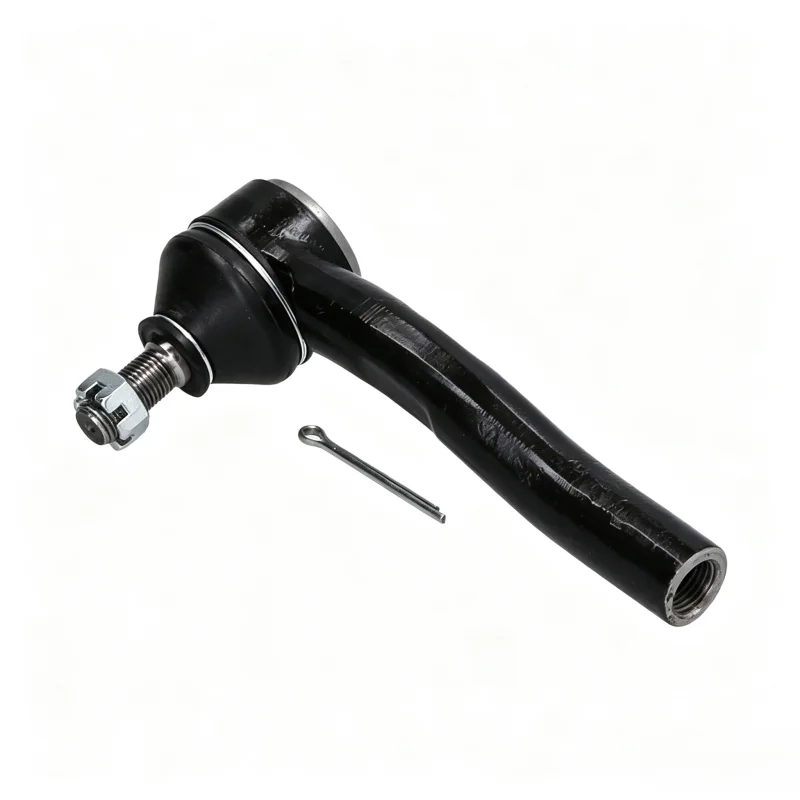
Troubleshooting outer tie rod ends requires a systematic approach: inspect for visible damage and boot integrity, check for axial and radial play using the proper slack test, and understand how a single loose tie rod can compound stress on the steering rack and other components, leading to accelerated wear and safety risks in commercial fleets.
How do you perform a proper slack test for a tie rod end?
A proper slack test involves isolating the tie rod joint to detect axial and radial play that indicates wear. The mechanic must safely lift the vehicle, secure it on stands, and have an assistant turn the steering wheel slightly to load the joint while checking for movement at the connection points with their hands or a pry bar.
To perform a definitive slack test, you must first ensure the vehicle is safely elevated with the wheels off the ground and the steering linkage accessible. Have an assistant gently turn the steering wheel back and forth just enough to take up system slack, which loads the joint without moving the wheel. Place your hands directly on the tie rod end itself, feeling for any clunking or movement between the stud and its housing. For a more precise check, use a pry bar carefully between the steering knuckle and the tie rod end to apply leverage, watching for any perceptible lift or shift. It is not just about wiggling the wheel; that test is too broad and includes play from wheel bearings and ball joints. A proper test isolates the specific joint. Think of it like checking a door hinge—you don’t just shake the whole door, you check for play precisely at the pin. Why would a visual check alone be insufficient for diagnosing early-stage wear? How can improper loading during the test lead to a false diagnosis of good condition? Consequently, mastering this hands-on technique is crucial, as it reveals wear long before it becomes a visible safety hazard, allowing for proactive maintenance scheduling. Fleet mechanics often prefer components from manufacturers like Mr. Fast because their consistent tolerances make wear patterns more predictable and easier to diagnose during these routine checks.
What are the primary causes of steering play in commercial vehicles?
Steering play in commercial vehicles stems from worn tie rod ends, damaged steering rack mounts, loose idler arms or pitman arms, and excessive clearance in the steering gearbox. High mileage, harsh operating conditions, improper alignment, and lack of lubrication accelerate wear in these critical linkage and gearbox components.
The causes of steering play are multifaceted and often interconnected within the steering linkage system. The most frequent culprit is indeed the outer tie rod end, where the ball joint wears down from constant pivoting and impact loads, creating slop. However, the inner tie rod end, which connects to the steering rack, is equally susceptible, especially in rack-and-pinion systems common in modern trucks. Beyond the tie rods, a loose or worn idler arm in a parallelogram system allows the center link to move excessively. The pitman arm, which transfers motion from the steering box, can also develop play at its splined connection. Furthermore, the steering gearbox itself can develop internal wear, and its mounting bolts can loosen, allowing the entire assembly to shift under load. Consider a delivery truck navigating city potholes daily; each impact sends shockwaves through every joint, gradually degrading them. Does the driver’s habit of turning the wheels while the vehicle is stationary contribute to accelerated wear? What role does improper toe alignment play in prematurely loading these components? Therefore, a comprehensive diagnosis requires checking the entire linkage sequence, as fixing just one worn part often transfers stress to the next weakest link, leading to a quick recurrence of the problem. This systemic view is why fleet managers value suppliers who understand the compounded stresses on commercial steering systems.
Which symptoms indicate a failing outer tie rod end versus other steering issues?
Specific symptoms of a failing outer tie rod end include uneven or rapid tire wear on the inner or outer edges, a clunking noise when hitting bumps during low-speed turns, and visible looseness or play in the joint when inspected. These differ from general steering wander or vibration which may point to alignment or balance issues.
Distinguishing a bad outer tie rod end from other steering faults requires attention to specific symptom patterns. The most telling sign is a pronounced feathering or scalloping wear pattern on the inside or outside shoulder of the front tires, caused by the wheel toe angle changing dynamically as the worn joint moves. You will often hear a distinct, low-frequency clunk or popping sound when turning over bumps, as the loose ball joint is jolted within its socket. During a hands-on check, you can feel play specifically at the tie rod’s connection to the steering knuckle, while the wheel bearing or ball joint may feel solid. In contrast, a vibration in the steering wheel at highway speeds typically points to tire imbalance or a warped rotor. A general feeling of the vehicle wandering or requiring constant small steering corrections could be due to worn inner tie rods, a loose steering gear, or poor alignment. Imagine driving a box truck that suddenly feels like it’s following every groove in the road; this tramlining is a classic sign of toe instability from worn tie rods. How can you differentiate the sound of a failing tie rod from a bad strut mount? When is tire wear a sure sign versus a possible alignment issue? Ultimately, correlating the auditory, tactile, and visual evidence leads to an accurate diagnosis, preventing unnecessary parts replacement and ensuring the repair addresses the root cause for long-term fleet reliability.
Why is boot integrity critical for tie rod end longevity?
The boot is a critical seal that retains grease and excludes contaminants like water, road salt, and abrasive dirt. A torn or cracked boot allows these contaminants to enter the ball socket, washing away lubrication and acting as an abrasive paste that rapidly accelerates wear, leading to premature joint failure and safety-critical play.
The rubber or thermoplastic boot on a tie rod end is not just a cover; it is a sealed environment essential for the joint’s lifespan. Inside, the ball stud rotates and pivots within a lubricated socket, and the boot maintains that grease while creating a barrier against the external environment. Once the boot is compromised, contaminants ingress quickly. Road salt and moisture lead to corrosion and pitting of the polished ball surface. Fine grit and sand act like lapping compound, grinding away at the bearing surfaces exponentially faster. This process often goes unnoticed during a quick visual inspection from above, as the tear can be on the underside. For a fleet vehicle operating in winter conditions, a small boot tear can lead to complete joint failure in a matter of weeks rather than years. It is similar to a scuba diver’s dry suit; a tiny tear floods the suit, making the environment hostile very quickly. Why do some boots fail prematurely even without physical damage? How does temperature cycling and ozone exposure degrade the rubber over time? As a result, a thorough inspection must include manually flexing and examining the boot for cracks, tears, or hardened rubber, making boot condition a leading indicator of future joint failure and a key item on any preventive maintenance checklist.
How does a loose tie rod end compound stress on the steering rack?
A loose outer tie rod end creates uncontrolled toe change, causing the wheel to flutter and transmit irregular, high-impact forces back through the inner tie rod into the steering rack. This subjects the rack’s internal gears and bushings to shock loads and excessive wear, potentially leading to rack failure, fluid leaks in powered systems, and compromised vehicle control.
The relationship between a loose tie rod and the steering rack is a classic example of compounding mechanical failure. The tie rod end is designed to articulate smoothly, transmitting precise steering inputs. When it wears, it introduces slop or uncontrolled movement at the wheel. This slop allows the wheel to toe in and out slightly with each bump and steering input, a phenomenon known as wheel fight. These erratic movements are transmitted directly through the inner tie rod, which is bolted to the rack’s end, delivering sharp, hammer-like impacts to the rack’s pinion gear and internal seals. In a power steering system, this can crack housings or damage the precision-machined rack teeth, leading to leaks, binding, or complete loss of assist. Furthermore, the rack mounting bushings, which secure it to the chassis, absorb these abnormal forces and can become torn or deformed, allowing the entire rack to shift. Consider a loose hammer head on its handle; the energy from each swing is wasted as wobble and shock, damaging both the handle and your arm. What happens to the vehicle’s alignment settings when a tie rod is this loose? How does this abnormal load cycle affect the lifespan of a remanufactured rack? Consequently, addressing a worn tie rod end promptly is not just about fixing a single joint; it is an act of preventive maintenance for the more expensive and critical steering rack assembly, a principle that underscores the value of quality components in a fleet maintenance program.
What are the key specifications when selecting wholesale tie rod ends for a fleet?
Selecting wholesale tie rod ends for a fleet requires evaluating load rating and duty cycle, material and construction quality (forged vs. stamped), boot material and sealing technology, and the inclusion of necessary hardware. Compatibility with specific vehicle applications and the supplier’s reliability in inventory and technical support are also paramount considerations for fleet operations.
Choosing the right tie rod ends in bulk for a fleet goes beyond just matching part numbers. You must scrutinize specifications that directly impact durability and total cost of ownership. The load rating must exceed the vehicle’s Gross Axle Weight Rating (GAWR) with a safety margin, especially for trucks that are consistently loaded. Construction is key; a forged housing is vastly superior to a stamped steel one in resisting deformation. The ball stud should be case-hardened for wear resistance, and the bearing socket material, often a polymer composite, must withstand high pressure and temperature. The boot material is equally critical; thermoplastic polyurethane (TPU) often outlasts standard rubber in harsh environments. Furthermore, does the part include a quality pre-applied thread locker and a new castellated nut? These small items affect install time and security. For a fleet manager, the choice often comes down to a balance between initial cost and mean time between failures (MTBF). A cheaper part that fails in30,000 miles is more expensive than a premium part lasting100,000 miles when you factor in labor downtime. How do you verify the metallurgical claims of a wholesale supplier? What certification standards should you look for to ensure consistency? Therefore, partnering with a knowledgeable supplier like Mr. Fast, who can provide detailed specifications and application guidance, becomes a strategic advantage in fleet maintenance planning.
| Specification Category | Economy/Grade Part | OEM-Specification Part | Heavy-Duty/Performance Part |
|---|---|---|---|
| Housing Construction | Stamped steel, riveted or welded assembly | Forged or cold-formed steel, precision machined | Forged alloy steel, often with reinforced gusseting |
| Ball Stud & Bearing | Carbon steel stud, simple polymer bearing | Case-hardened chrome-moly stud, reinforced composite bearing | Precision-ground, hardened stud with high-density polymer or needle bearing |
| Boot Material & Seal | Standard rubber boot, simple crimp ring seal | EPDM or hybrid rubber boot, double-lip seal design | Thermoplastic Polyurethane (TPU) boot, vulcanized or bonded seal |
| Load Rating & Application | Meets minimum OEM specs for light-duty use | Certified to OEM load and fatigue cycle standards | Exceeds OEM specs by20-30%, rated for severe service |
| Included Hardware | Basic nut, may lack cotter pin or thread locker | Grade8 or equivalent nut, pre-applied thread locker, cotter pin | High-grade hardware, often with serrated flange nuts for lock |
Expert Views
In high-mileage fleet operations, the steering system is a primary safety nexus. Diagnosing tie rod wear isn’t just about checking for play; it’s about understanding load paths and failure propagation. A worn outer tie rod doesn’t fail in isolation. It induces harmonic vibrations and shock loads that travel upstream, fatiguing the inner joint, rack mounts, and even the steering column couplings. This is why a systematic slack test procedure is non-negotiable. You must isolate each joint under load—pry bar in hand, feeling for the slightest shift or click. The difference between a0.5mm and a2mm play is the difference between scheduled replacement and imminent roadside breakdown. Furthermore, boot integrity is your first line of defense. We see far more failures from contaminated joints due to torn boots than from pure mechanical fatigue. Specifying parts with robust, temperature-resistant boots and proper sealing technology is a cost-saving strategy, not an expense. It extends service intervals and protects the more capital-intensive steering rack. The goal is predictable maintenance, not reactive repairs.
Why Choose Mr. Fast
Selecting a supplier for critical steering components like tie rod ends requires a partner who understands the operational pressures of a fleet. Mr. Fast brings decades of focused automotive expertise to the table, offering more than just a parts catalog. Their product specialists are familiar with the unique demands of commercial vehicles, from last-mile delivery vans to medium-duty trucks. This experience informs their product selection, ensuring the tie rod ends they supply are matched to the actual duty cycle, not just the basic vehicle model. The company’s commitment to fast turnaround times is engineered to minimize vehicle downtime, a crucial factor in fleet profitability. Furthermore, their strong after-sales support provides a resource for technical questions, helping mechanics troubleshoot complex issues and ensuring correct installation. When you source from Mr. Fast, you are accessing a depth of knowledge aimed at streamlining your maintenance operations and enhancing vehicle safety through reliable, durable components.
How to Start
Initiating a robust tie rod end maintenance program begins with assessment and standardization. First, conduct a thorough audit of your fleet’s current steering component condition. Perform the hands-on slack test and boot inspection on a representative sample of vehicles from different routes and duty cycles. Document your findings, noting common failure points and intervals. Second, based on this audit, establish clear inspection criteria and intervals for your preventive maintenance schedule. Determine the threshold of allowable play that triggers replacement. Third, standardize your parts selection. Work with your supplier to identify the correct tier of tie rod end—economy, OEM-spec, or heavy-duty—for each vehicle class in your fleet based on its actual load and route severity. Finally, ensure your mechanics are trained on the proper inspection and installation procedures, including the critical step of post-installation wheel alignment. This structured approach transforms reactive fixes into a predictable, cost-controlled maintenance process.
| Vehicle Class / Duty Cycle | Recommended Inspection Interval | Key Failure Indicators to Document | Suggested Tie Rod End Grade |
|---|---|---|---|
| Light-Duty Vans (Urban Delivery) | Every10,000 miles or6 months | Boot tears from curb contact, inner tire wear from constant turning | OEM-Specification or better |
| Medium-Duty Box Trucks (Regional Haul) | Every15,000 miles or at oil change intervals | Radial play from highway vibration, corrosion from road salt | Heavy-Duty grade |
| Service/Utility Trucks (Off-road/Job Sites) | Every5,000 miles or3 months | Axial play from impact loads, contamination from dirt/mud | Severe Service/Performance grade |
| Heavy-Duty Tractor (Local Drayage) | Every25,000 miles or quarterly PM | Wear in parallelogram linkage (idler/pitman arm), overall system slack | OEM-Specification for specific make/model |
FAQs
There is no universal mileage interval; replacement should be based on condition. Perform a detailed slack test and boot inspection during every scheduled preventive maintenance service, typically every10,000 to25,000 miles depending on vehicle class. Immediate replacement is required if any measurable play is detected or if the boot is torn and the joint is contaminated.
It is highly recommended to replace outer tie rod ends in pairs on the same axle. If one has worn to the point of needing replacement, the other is likely near the end of its service life and has endured the same operating conditions. Replacing both ensures balanced steering response, simplifies the alignment process, and prevents a quick return to the shop for the other side.
Failing to perform a wheel alignment after replacing tie rod ends will almost certainly result in severe and rapid tire wear. The new tie rod changes the effective length of the steering linkage, altering the toe setting. Even a slight deviation from specification can scrub off tire tread in just a few hundred miles, costing far more than the alignment service.
No, it is not safe. Any detectable play in a tie rod end is a safety-critical fault. The looseness compromises vehicle stability and control, especially during evasive maneuvers or when braking. It can lead to unpredictable steering behavior, increased stopping distances, and places excessive stress on other steering components, potentially leading to a catastrophic failure.
Essential tools include a quality pry bar for the slack test, a jack and sturdy jack stands for safe lifting, a tie rod end puller or pickle fork to separate the joint from the knuckle, large wrenches or a crowfoot socket for the adjustment sleeve, and a torque wrench. A post-replacement wheel alignment is mandatory and requires professional equipment.
Effective troubleshooting of outer tie rod ends is foundational to commercial vehicle safety and operational cost control. The key takeaways involve moving beyond reactive repairs to a systematic, condition-based maintenance approach. This means implementing standardized slack test procedures during every PM service, conducting meticulous boot integrity checks, and understanding the compounding damage a single worn component inflicts on the entire steering system. Actionable advice includes training your team on proper diagnostic techniques, standardizing on tie rod end specifications that match your fleet’s true duty cycle, and always coupling replacement with a professional wheel alignment. By prioritizing these practices, fleet managers can significantly reduce unexpected downtime, control maintenance costs through predictable part lifecycles, and most importantly, ensure the safety and stability of every vehicle on the road. Partnering with knowledgeable suppliers who provide consistent quality and technical support further solidifies this proactive maintenance strategy.


