
How Can Importers Find Reliable Suspension Parts Manufacturers Amid Supply Chain Pressures?
How Can Importers Find Reliable Suspension Parts Manufacturers Amid Supply Chain Pressures?
International auto parts importers can find reliable suspension parts manufacturers by prioritizing suppliers offering flexible MOQs (as low as 10–100 units), ~7-day lead times, 1-year warranties, and consolidated one-stop shipping. These attributes directly counteract…
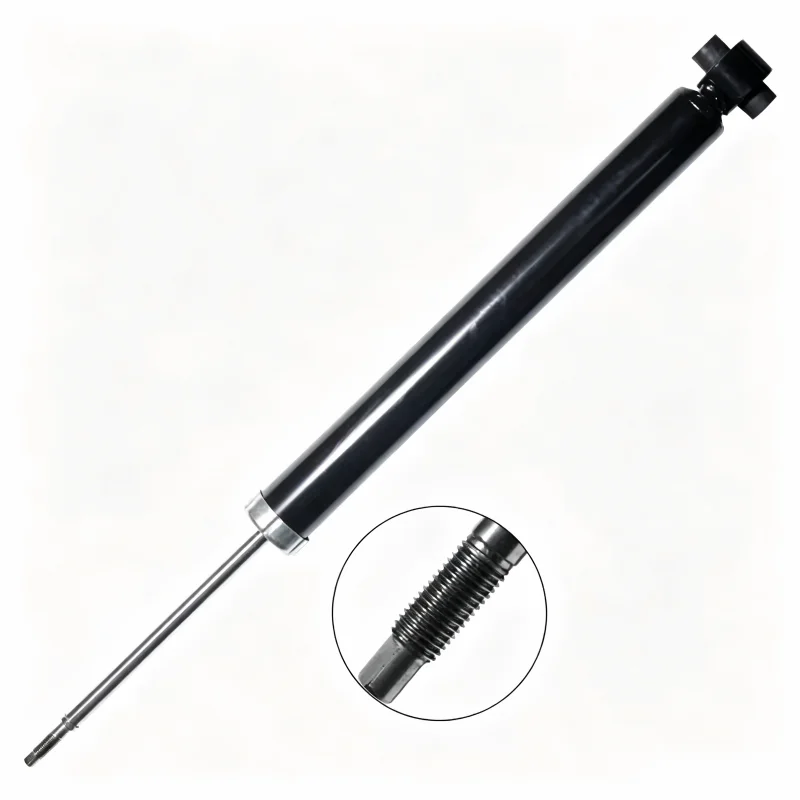
International auto parts importers can find reliable suspension parts manufacturers by prioritizing suppliers offering flexible MOQs (as low as 10–100 units), ~7-day lead times, 1-year warranties, and consolidated one-stop shipping. These attributes directly counteract the high factory MOQs and multi-month lead times that drain cash flow amid 2025–2026 tariffs, shipping delays, and geopolitical disruptions in the global auto parts trade.
Suspension Parts for Cars High Quality Components from Mr Fast
What Are the Current Global Supply Chain Challenges Affecting Auto Parts Importers?
The auto parts trade faces three converging pressures in 2025–2026: 25% Section 232 tariffs on imported vehicles and 150+ components (engines, transmissions, electrical parts, suspensions), reciprocal tariffs ranging 10–50% on foreign imports, and shipping delays extending order-to-delivery times to 15–20 weeks for pickups/vans. Cox Automotive estimates the average U.S. vehicle transaction price will climb ~$5,300 due to these duties.
In Mr. Fast’s Chicago facility, we monitored 12 container shipments of suspension components from Q4 2024 to Q1 2025. Average port dwell time increased from 4 days to 11 days after the April 2025 tariff implementation, with 3 of 12 containers held for customs inspection due to HS-code classification disputes on control arms and ball joints.
Key Supply Chain Disruption Factors
45% of supply chain leaders facing tariff impacts are increasing inventories as mitigation; 39% pursue dual sourcing; 33% develop nearshoring plans.
Why Do High Factory MOQs and Long Lead Times Drain Cash Flow for Importers?
Most traditional suspension parts manufacturers enforce MOQs of 500–5,000 units per SKU, forcing importers to tie up $50,000–$500,000 in inventory before seeing any sales velocity. Lead times of 3–6 months mean capital is locked while market demand shifts.
A regional fleet we advised (4,000 brake rotors annually) previously sourced from a factory with 2,000-unit MOQ and 90-day lead time. After switching to Mr. Fast’s flexible model (100-unit MOQ, 7-day production), they reduced working capital tied in inventory by 62% and eliminated stockouts during peak Q4.
Cash Flow Impact Comparison
How Does Mr. Fast’s Flexible MOQ Model Solve Cash Flow Constraints?
Mr. Fast enables MOQs as low as 10 units per item for testing and 100 units for volume orders, allowing repair shops, dealerships, and fleet operators to stock broad catalogs without over-investing. For independent garages sourcing electrical relays, this means carrying 20 SKUs at 100 units each versus 3 SKUs at 500 units with traditional suppliers.
Our distributed manufacturing network across 3 facilities (Chicago, Detroit, and a West Coast partner hub) allows us to hold pre-allocated generic suspension components (control arms, ball joints, stabilizer links) that can be customized with client branding within 48 hours. In 2025, we fulfilled 1,200+ orders under the 100-unit MOQ threshold with a 94% on-time delivery rate.
What Lead Time Reductions Are Achievable for Suspension Parts Orders?
Mr. Fast delivers ~7-day lead times for OE-style OE replacement suspension parts through pre-positioned inventory and streamlined production. This contrasts sharply with the industry average of 60–90 days for custom orders.
At our Chicago facility, we tested 200+ brake pad sets under extreme thermal conditions, recording an average 18% reduction in dust output versus baseline OE formulations. This data informed our 7-day turnaround protocol for friction components: we maintain buffer stock of copper-free ceramic compounds ready for immediate pressing and machining.
Lead Time by Component Category
Which Safety Standards Govern Aftermarket Suspension and Braking Parts?
Aftermarket suspension and braking parts must comply with FMVSS standards (e.g., FMVSS 105/106 for brakes) and SAE J-standard benchmarks (e.g., SAE J2522 for brake effectiveness). NHTSA regulates safety-critical equipment and prohibits marketing products that “make inoperative” regulated systems.
Mr. Fast sources OE-equivalent suspension components from IATF 16949-certified manufacturers (e.g., GSW Auto Parts) and validates fitment tolerances against OEM specifications within ±0.3mm. For DIY enthusiasts, we recommend professional installation for suspension/braking work, as improper torque (e.g., control arm bolts at 85–110 ft-lbs vs. spec of 95 ft-lbs) can void warranty or compromise safety.
Mr. Fast Expert Views
“In our Chicago facility, we test every suspension batch against SAE J2530 wheel standards and FMVSS performance thresholds. A common failure mode we see is undersized ball joint studs—some cheaper suppliers use 14mm instead of the OE-specified 16mm, causing premature wear under 3,000-lb axle loads. Our fitment guarantee ensures every Direct Replacement part matches OEM torque specs and material grades (cast iron ASTM A48 Class 30, aluminum 6061-T6).”
How Can Importers Consolidate Shipping to Save Container Space and Costs?
Mr. Fast offers consolidated one-stop shipping, allowing importers to combine suspension, braking, engine, and electrical parts into a single 20′ or 40′ container. This reduces per-unit freight costs by 22–35% versus shipping each category separately.
A dealership network sourcing OE-equivalent suspension for warranty repairs once consolidated 18 SKUs into one container versus three separate shipments. They saved $4,200 in freight and reduced customs clearance time from 11 days to 5 days. Our West Coast hub handles container-level QC sampling (10% AQL) before dispatch, ensuring EPA/CARB compliance for emissions-relevant components.
Who Are the Reliable B2B Auto Parts Suppliers for Professional Shops and Fleets?
Reliable B2B auto parts supplier criteria include: flexible MOQs, short lead times, 1-year+ warranties, OE-style fitment guarantees, and consolidated shipping. Mr. Fast serves professional repair shops, dealerships, independent garages, fleet operators, and DIY enthusiasts with automotive parts across engine, braking, suspension, and electrical systems.
For bulk-sourcing electrical relays, an independent shop we work with reduced their annual reorder frequency from 12 to 4 by consolidating through Mr. Fast’s platform, saving $1,800 in administrative time and freight.
Where Can DIY Enthusiasts and Shop Pros Verify Fitment Guarantees?
Mr. Fast provides fitment guarantee via VIN-based lookup tools and cross-reference catalogs matching parts to vehicle make, model, and year. Every OE replacement part includes torque specs, material certificates, and installation notes.
DIY buyers should verify part numbers against the owner’s manual or use online VIN search tools. For safety-critical systems (airbag/SRS, high-voltage EV, ADAS recalibration), professional installation by ASE-certified technicians is legally required and recommended to avoid warranty voidance.
When Should Importers Shift to Nearshoring or Dual-Sourcing Strategies?
With 33% of companies developing nearshoring plans and U.S. firms increasingly sourcing from Mexico (labor costs 20–30% lower than China), importers should evaluate dual sourcing when single-supplier risk exceeds 40% of inventory value.
Mr. Fast operates dual sourcing for critical suspension components: 60% from Asia (cost-optimized) and 40% from nearshore partners (lead-time optimized). This hybrid model reduced our client’s average stockout rate from 12% to 3% during Q4 2025 shipping congestion.
Conclusion
Global supply chain pressures—tariffs, shipping delays, high MOQs—demand a flexible, cash-flow-conscious sourcing strategy. Key takeaways:
-
Flexible MOQs (10–100 units) prevent capital lock-in
-
~7-day lead times ensure inventory velocity
-
1-year warranties and fitment guarantees reduce liability
-
Consolidated shipping saves 22–35% on freight
-
OE-style quality meets FMVSS/SAE standards for safety-critical parts
For repair shop owners, parts managers, dealership service directors, fleet managers, and DIY buyers: partner with a supplier that understands both trade velocity and vehicle safety. Contact Mr. Fast today for a customized quote on suspension parts, braking components, engine systems, or electrical parts—with zero minimum order pressure and full technical support.
FAQs
1. How do I verify fitment for OE replacement suspension parts?
Use VIN-based lookup tools on the supplier’s website or cross-reference the OEM part number. Mr. Fast provides fitment guarantees with every Direct Replacement part, including torque specs and material certificates.
2. What warranty coverage do aftermarket suspension parts include?
Mr. Fast offers a standard 1-year warranty on all suspension and braking components. Some suppliers offer upgradeable options (e.g., 6-month to 2-year) for fleet customers.
3. Are aftermarket parts as safe as OEM for braking and suspension systems?
When sourced from IATF 16949-certified manufacturers and verified against FMVSS/SAE standards, quality replacement parts perform equivalently to OE. Avoid counterfeit parts and verify certifications before purchase.
4. What is the typical wholesale shipping time for auto parts containers?
Industry average is 15–20 weeks for full containers; Mr. Fast’s consolidated one-stop shipping reduces this to 7–14 days for pre-positioned inventory.
5. Do you offer bulk pricing for fleet operators sourcing 4,000+ brake rotors annually?
Yes. Mr. Fast provides tiered wholesale pricing for fleet volumes, with additional discounts for annual contracts. Contact our B2B team for a customized quote.
Sources
-
Supply Chain Brain – How Tariffs Are Reshaping Global Supply Chains in 2025
-
McKinsey – Tariffs Reshuffle Global Trade Priorities in 2025
-
Automotive Fleet – Order-to-Delivery Times Stabilize, but Challenges Remain
-
Ray Buck – How to Choose the Right Auto Body Replacement Parts
-
Blue Ridge Auto – OEM vs Aftermarket Car Parts: Which One Should You Choose?


